
Common AI jobs
Drafting tools propose replies. Routing tools classify and assign. Summarization tools condense ticket history. QA tools assess interactions. Knowledge tools retrieve answers. Commitment tools identify future obligations and deadlines.
Promise’s narrow role
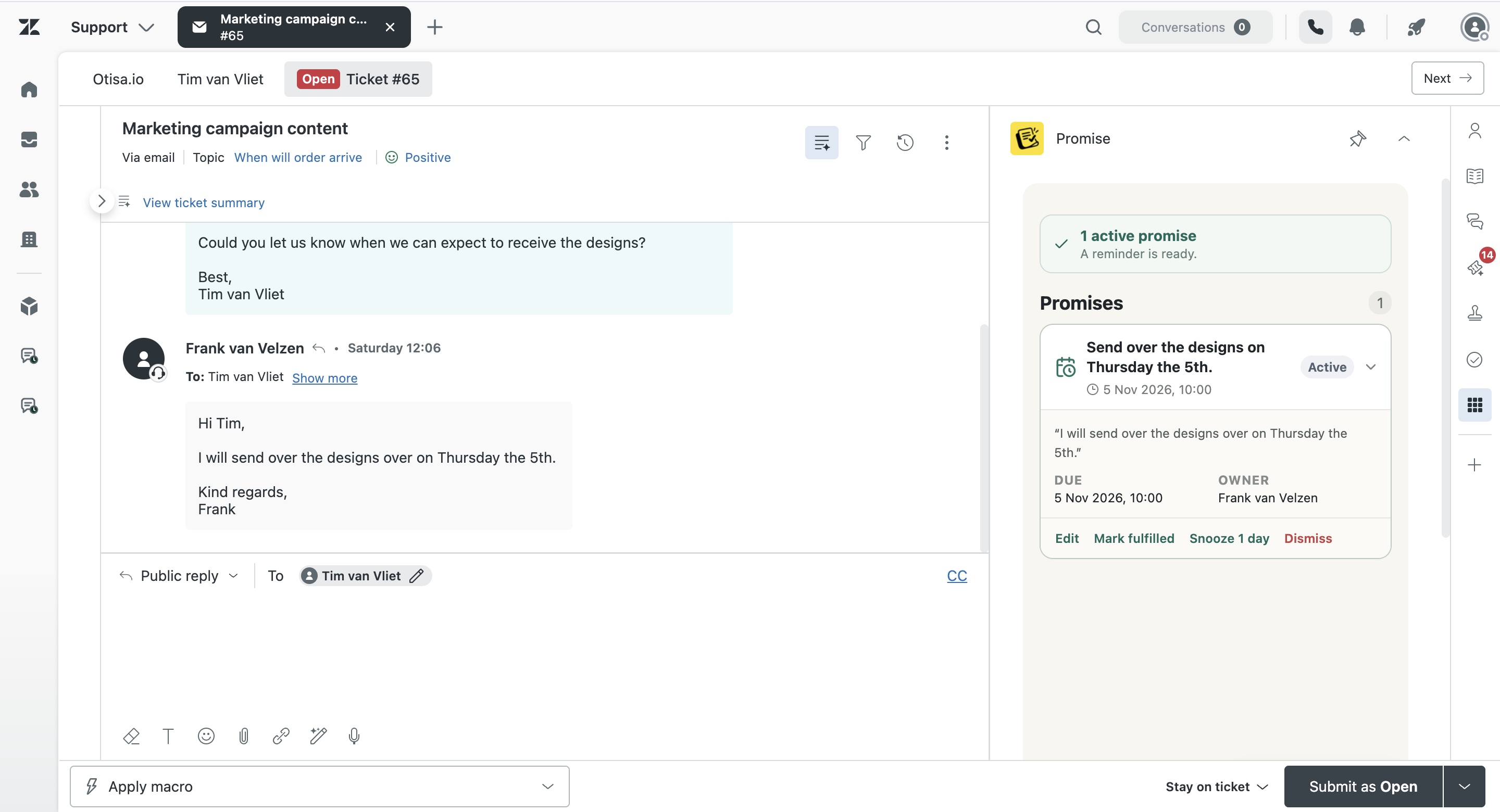
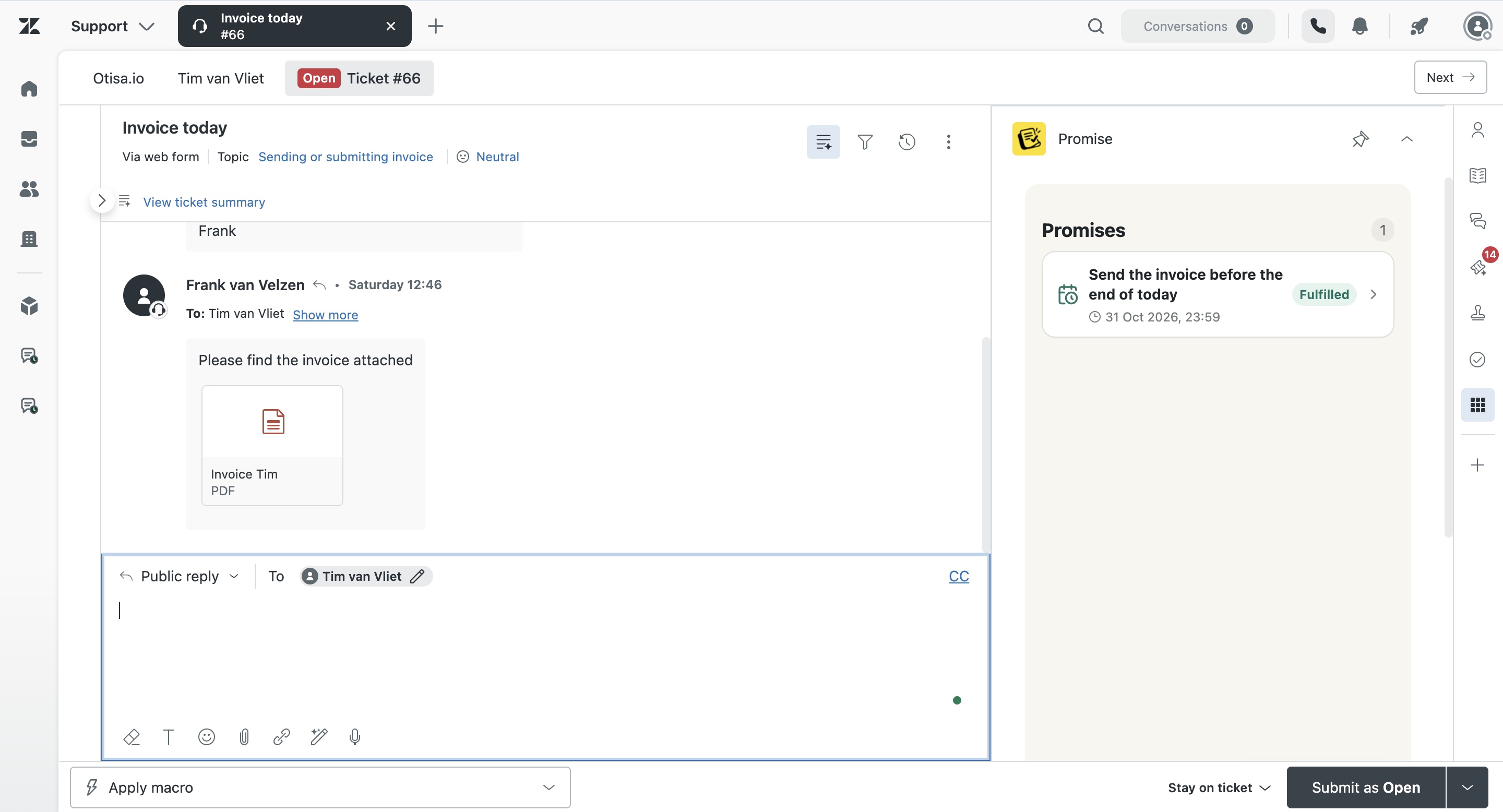
Promise uses AI to detect and interpret commitments and assist with completion checks and briefings. It does not claim to be a general Zendesk copilot or replacement for the other categories.
Questions for every vendor
What data is sent? Can users correct the result? What happens after an error? Is the action public or internal? Which model and retention terms apply? How is access governed? Can the feature be disabled?
How Promise handles this in Zendesk
Promise is built around the commitment as a separate operational object. It keeps the original wording, a concise summary, owner, due date, status and source ticket together. Agents can review and correct the record. Managers can see team status and open the underlying ticket before acting.
Promise costs $5 per agent/month and is not yet live on the Zendesk Marketplace. AI results can be incomplete or incorrect, so the product supports human review rather than claiming perfect detection.
Examples from real support work
I’ll check with the warehouse and update you tomorrow.
I’ll ask engineering and come back to you Friday.
I’ll confirm with the hotel and update you this afternoon.
I’ll contact the carrier and send the latest status tomorrow.
Questions about AI tools for Zendesk
Is Promise a reply-writing tool?
No. Its core role is commitment detection and tracking, and it does not automatically send public replies.
Should AI act without review?
High-impact or ambiguous results should include human review and correction.
Does one AI tool cover every Zendesk use case?
Usually not. Evaluate products against a specific workflow.