
Clear commitments
“I’ll send the invoice Friday,” “I’ll confirm the booking this afternoon,” and “I’ll update you tomorrow” all contain an owned future action and a time expectation.
Dependency-based commitments
“I’ll ask engineering and come back to you Friday” includes an external dependency, but the promise to update the customer still belongs to the agent.
Vague language to improve
“We’ll look into it” and “someone should get back to you” lack clear ownership or timing. Rewrite them as a realistic next update: “I’ll check with finance and update you by 3pm tomorrow.”
Not every future statement is a promise
“The carrier usually replies within two days” is information, not necessarily an agent commitment. “I’ll contact the carrier today and update you when they reply” is a commitment.
How Promise handles this in Zendesk
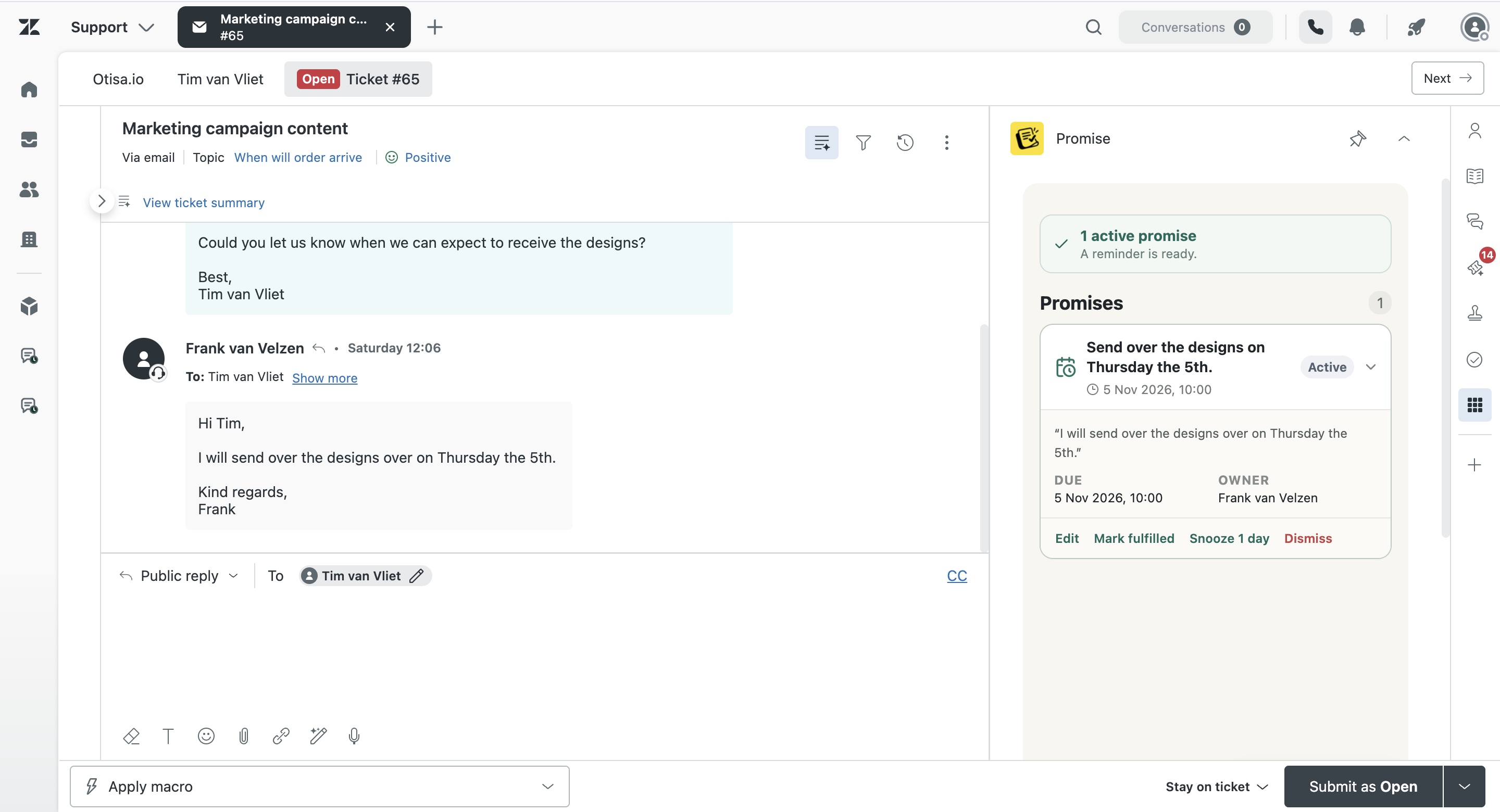
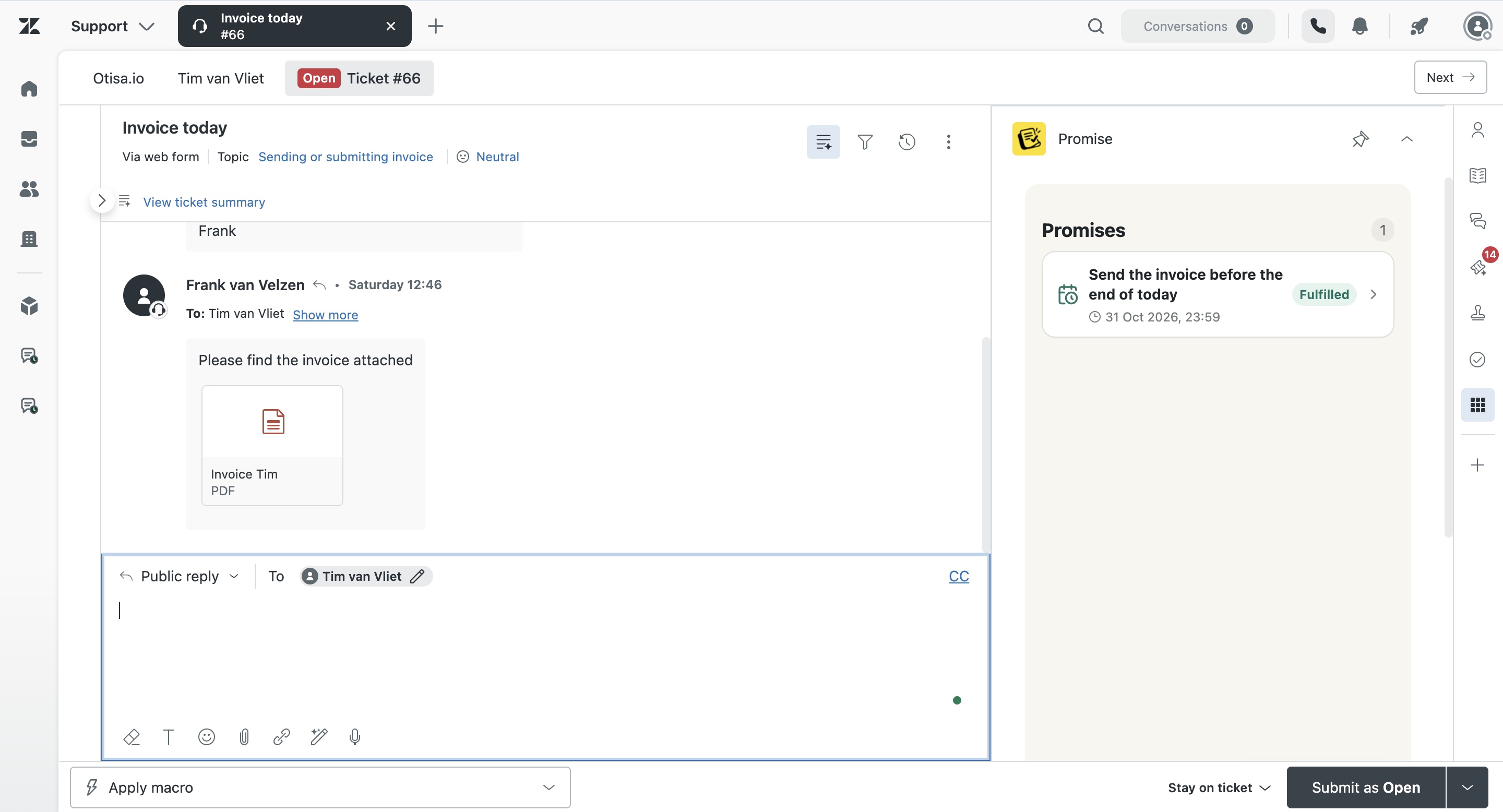
Promise is built around the commitment as a separate operational object. It keeps the original wording, a concise summary, owner, due date, status and source ticket together. Agents can review and correct the record. Managers can see team status and open the underlying ticket before acting.
Promise costs $5 per agent/month and is not yet live on the Zendesk Marketplace. AI results can be incomplete or incorrect, so the product supports human review rather than claiming perfect detection.
Examples from real support work
I’ll check with the warehouse and update you tomorrow.
I’ll ask engineering and come back to you Friday.
I’ll confirm with the hotel and update you this afternoon.
I’ll contact the carrier and send the latest status tomorrow.
Questions about customer commitment examples
Does a commitment need an exact date?
No, but a practical update time makes it easier to manage.
Is “we are investigating” a commitment?
It describes current work but may not promise a future customer update.
Can one sentence contain two commitments?
Yes. For example, an agent might promise both to contact a supplier and update the customer.