
The trust moment
“We are looking into it” is vague. “I’ll confirm the replacement status tomorrow” gives the customer a concrete expectation. That clarity is valuable only if the team preserves and revisits the obligation.
Reliability includes updates
Keeping a promise may mean delivering the result, but it can also mean returning on time with an honest update when an external dependency is unresolved. Silence is usually the damaging part.
What tracking changes
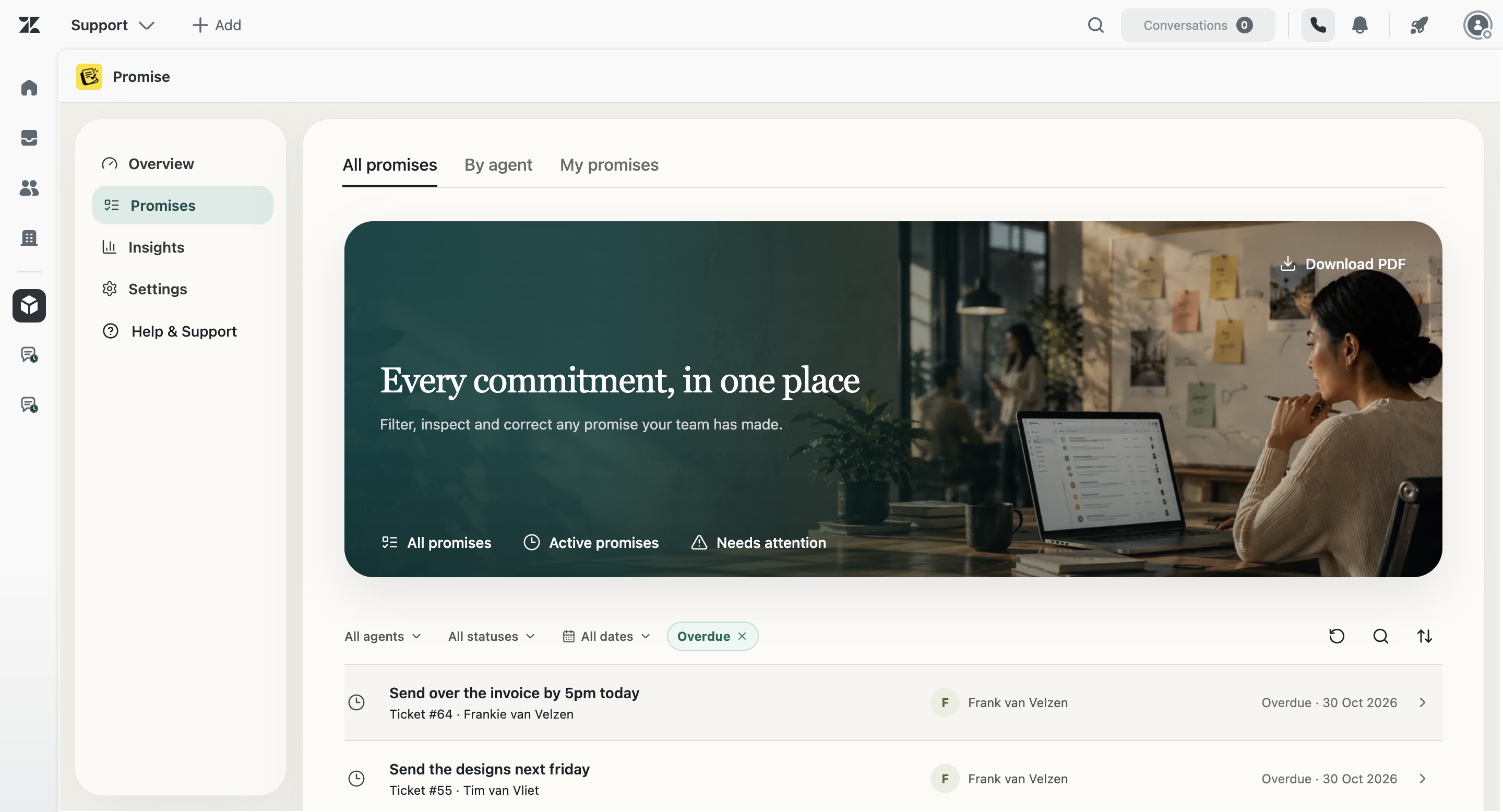
A shared commitment view lets agents and managers see what customers are waiting for before the deadline passes. Promise supports that visibility; it does not claim a guaranteed CSAT or retention result.
How Promise handles this in Zendesk
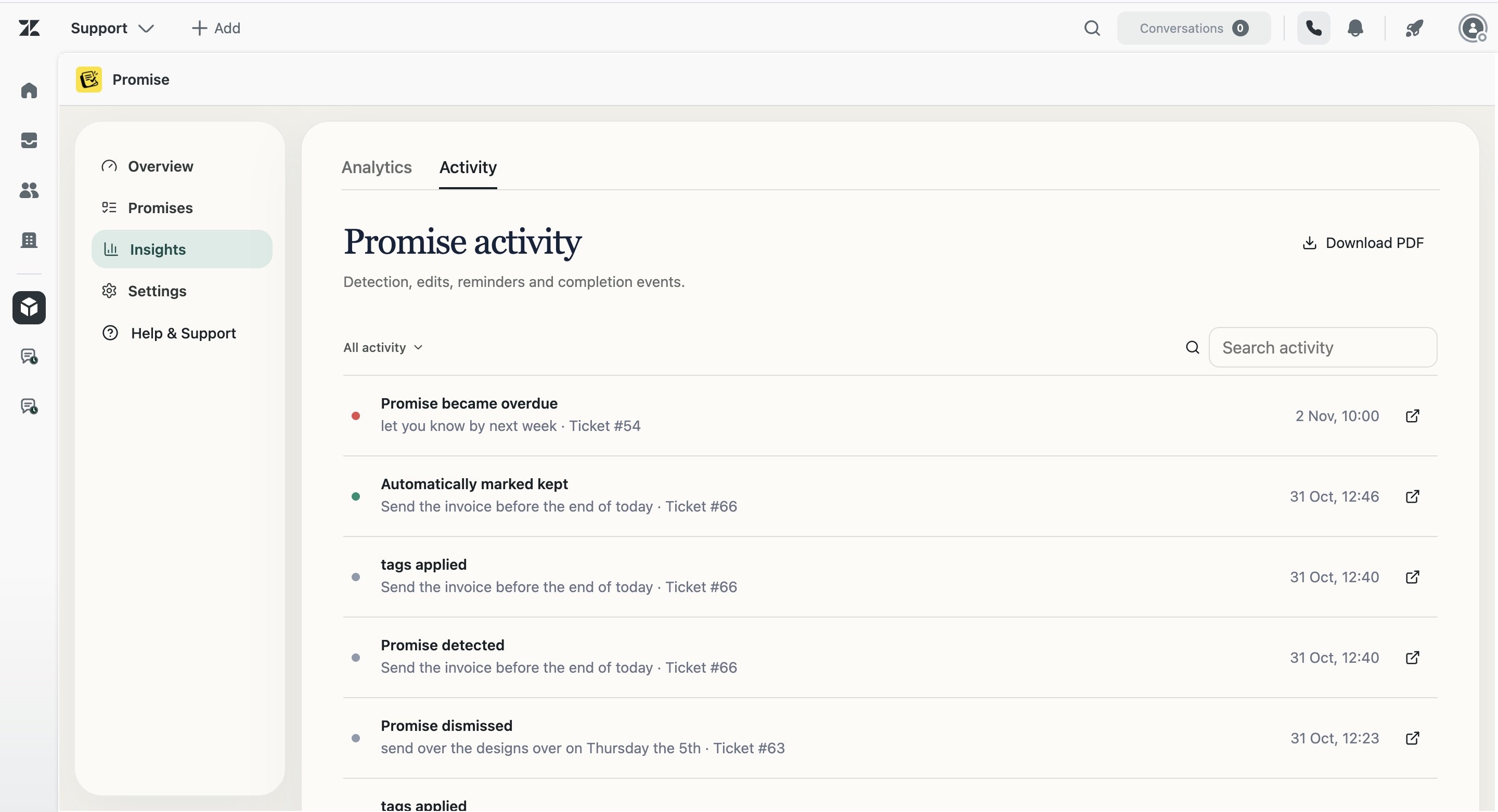
Promise is built around the commitment as a separate operational object. It keeps the original wording, a concise summary, owner, due date, status and source ticket together. Agents can review and correct the record. Managers can see team status and open the underlying ticket before acting.
Promise costs $5 per agent/month and is not yet live on the Zendesk Marketplace. AI results can be incomplete or incorrect, so the product supports human review rather than claiming perfect detection.
Examples from real support work
I’ll check with the warehouse and update you tomorrow.
I’ll ask engineering and come back to you Friday.
I’ll confirm with the hotel and update you this afternoon.
I’ll contact the carrier and send the latest status tomorrow.
Questions about customer trust and support promises
Does commitment tracking guarantee customer trust?
No. It supports reliable behavior but cannot guarantee a customer outcome.
Should agents promise exact dates?
Only when the date is realistic; otherwise promise a clear update point.
What if the action cannot be completed on time?
Contact the customer by the promised update time, explain the situation and set a new realistic expectation.