
Where manual reminders work
A personal calendar or task is fast for occasional follow-ups and gives the agent control over timing. It may be entirely sufficient for a small, stable workload.
Where they become fragile
The agent must notice every promise, copy the details, keep the ticket link, share coverage during absence and reconcile completion. Managers may not see the obligation until it is already late.
Where Promise differs
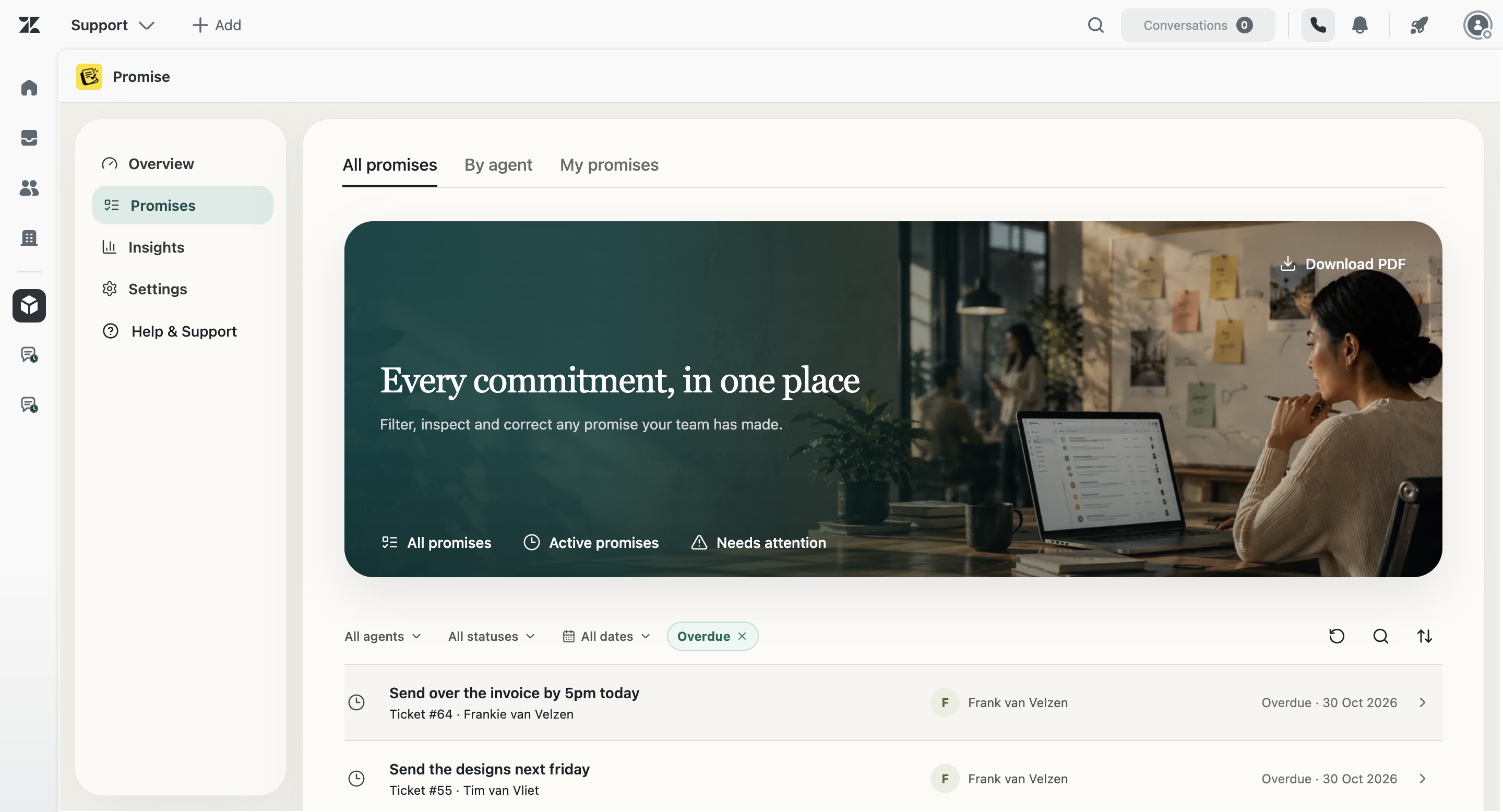
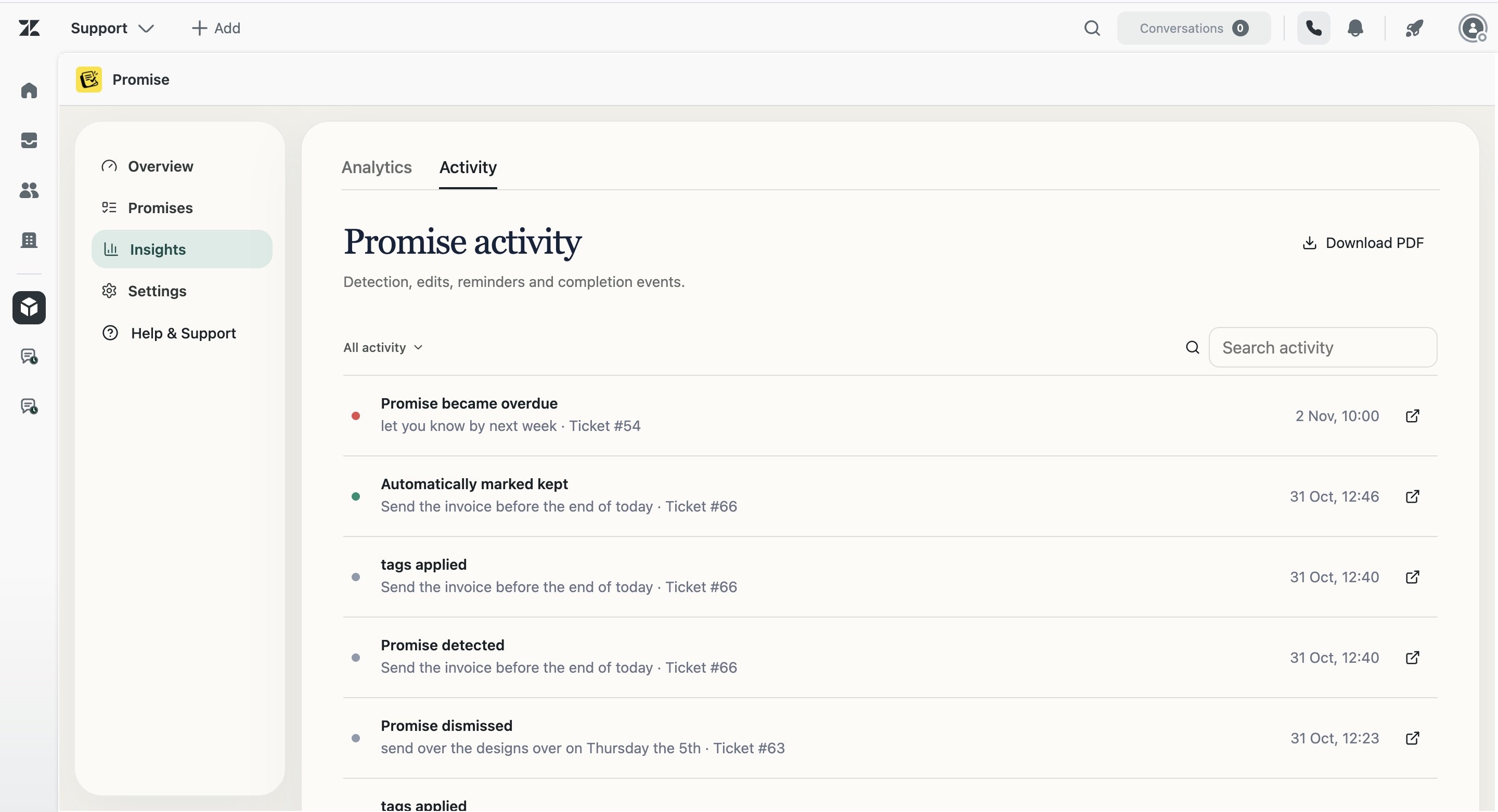
Promise detects candidate commitments, preserves the wording and ticket, and places the item in agent and manager views. The tradeoff is AI review and a dedicated workflow to govern.
How Promise handles this in Zendesk
Promise is built around the commitment as a separate operational object. It keeps the original wording, a concise summary, owner, due date, status and source ticket together. Agents can review and correct the record. Managers can see team status and open the underlying ticket before acting.
Promise costs $5 per agent/month and is not yet live on the Zendesk Marketplace. AI results can be incomplete or incorrect, so the product supports human review rather than claiming perfect detection.
Examples from real support work
I’ll check with the warehouse and update you tomorrow.
I’ll ask engineering and come back to you Friday.
I’ll confirm with the hotel and update you this afternoon.
I’ll contact the carrier and send the latest status tomorrow.
Questions about Promise vs manual reminders
Does Promise eliminate manual review?
No. Users should verify important detections and deadlines.
Are manual reminders bad?
No. They are useful for simple personal workflows.
Can teams use both?
Yes, but define which system is the source of truth for customer commitments.