
Why follow-ups disappear
The commitment may be buried in prose, the ticket may move status, the agent may wait on another team, or a personal reminder may not be visible during absence. The problem is often system design, not carelessness.
A five-part control
Capture the exact promise, make the due time explicit, keep the owner visible, review upcoming and overdue items daily, and return to the original ticket when the action is complete. Managers should use the list to remove blockers as well as ask for updates.
Where Promise helps
Promise automates initial detection and gives the team a shared operational view. Human review still matters, especially for vague language, external dependencies and commitments with no explicit deadline.
How Promise handles this in Zendesk
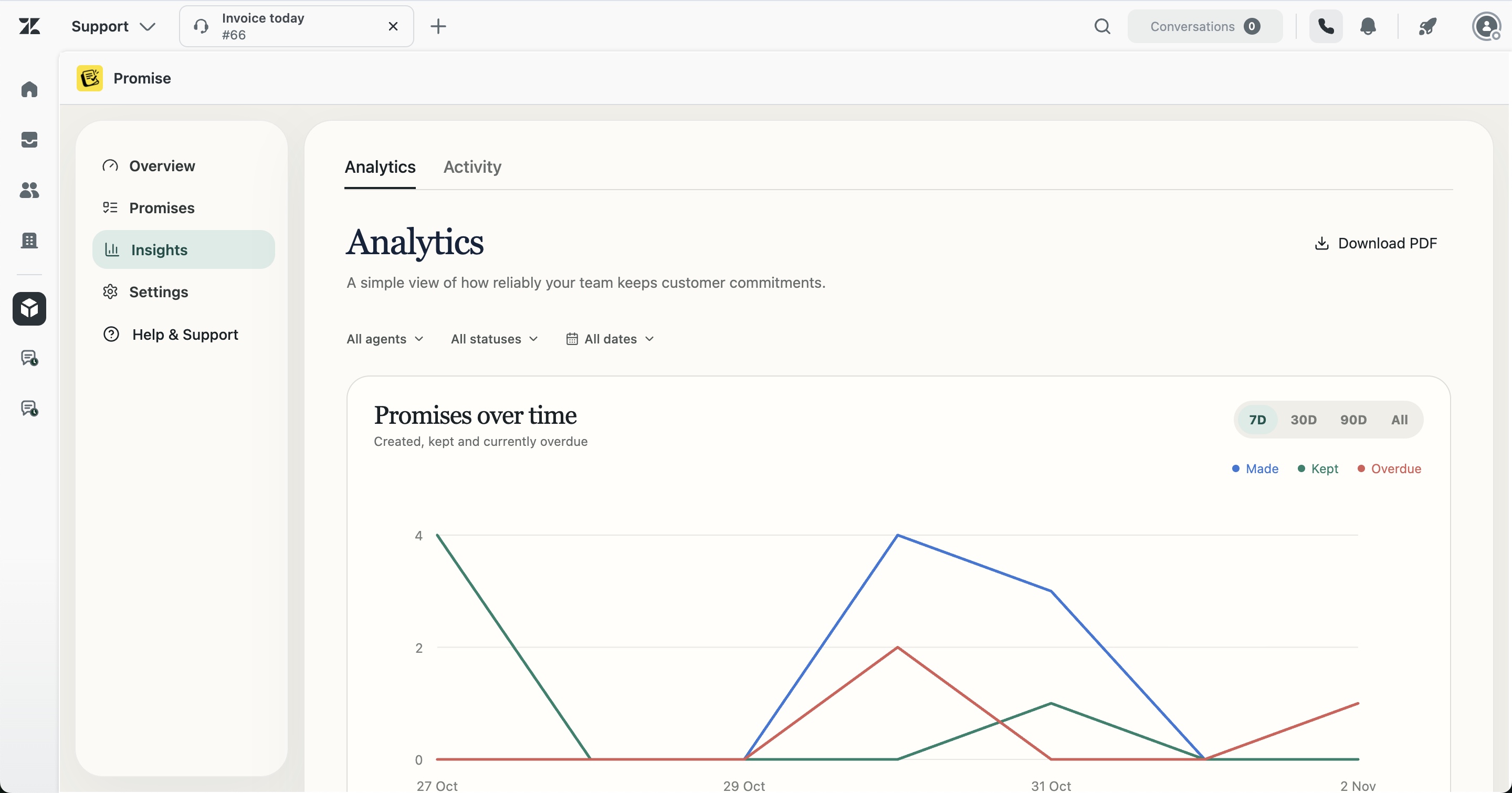
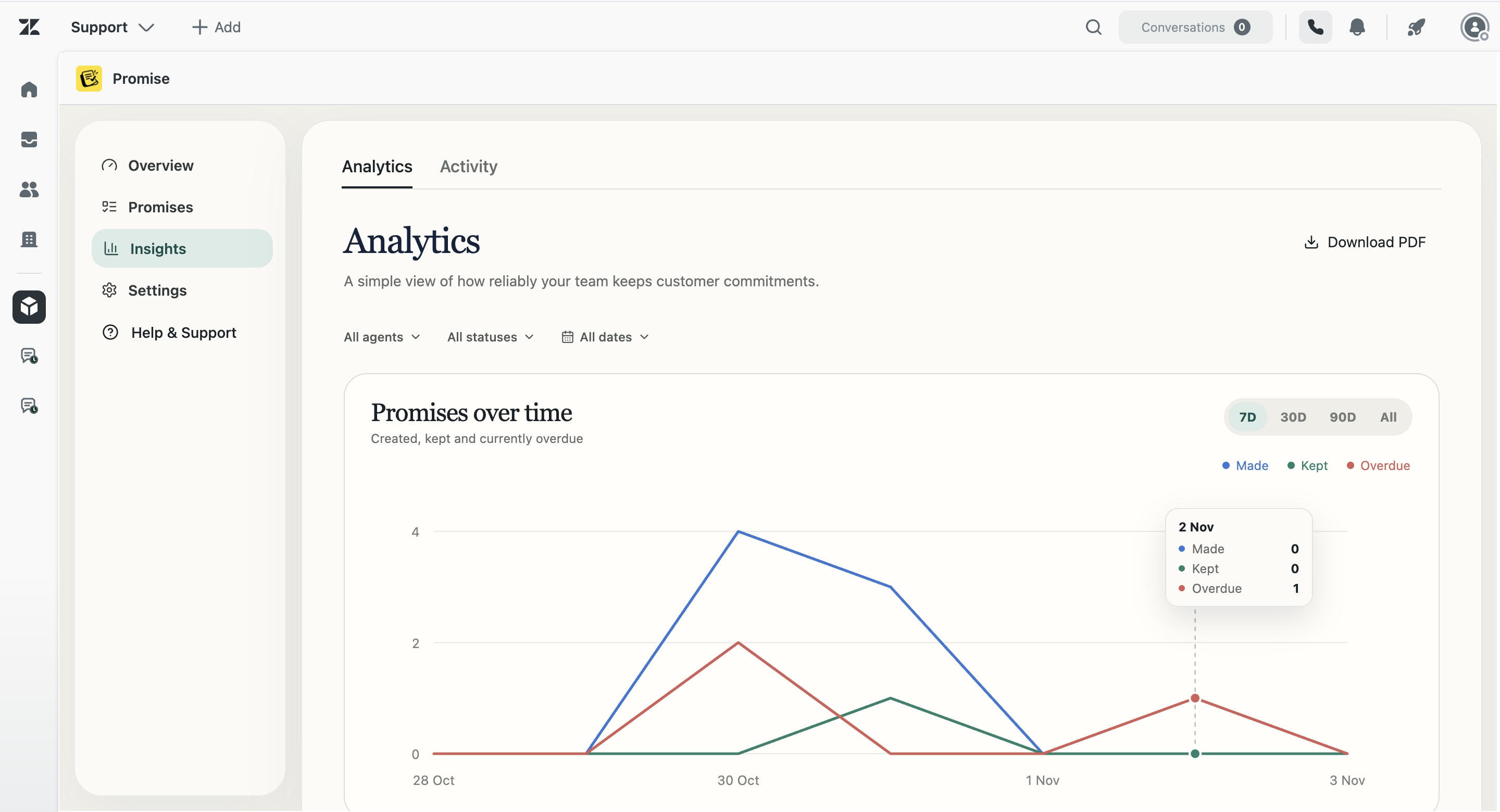
Promise is built around the commitment as a separate operational object. It keeps the original wording, a concise summary, owner, due date, status and source ticket together. Agents can review and correct the record. Managers can see team status and open the underlying ticket before acting.
Promise costs $5 per agent/month and is not yet live on the Zendesk Marketplace. AI results can be incomplete or incorrect, so the product supports human review rather than claiming perfect detection.
Examples from real support work
I’ll check with the warehouse and update you tomorrow.
I’ll ask engineering and come back to you Friday.
I’ll confirm with the hotel and update you this afternoon.
I’ll contact the carrier and send the latest status tomorrow.
Questions about prevent missed customer follow-ups
Why do good agents still miss follow-ups?
Commitments can be hidden in busy conversations and separated from normal ticket targets.
Should every follow-up have a deadline?
A clear deadline is preferable; Promise can surface items that still need one.
Is an overdue list enough?
No. Teams also need ownership, context and a workflow for resolving blockers.