
Memory is the wrong control
Busy queues, shift changes and external dependencies make personal recall unreliable. The system should surface the obligation at the right time.
A workable habit
Make the promise specific, include an update time, review detections before leaving the ticket, scan due-today work at the start of the shift and mark the item kept only after the customer loop is closed.
How Promise supports the habit
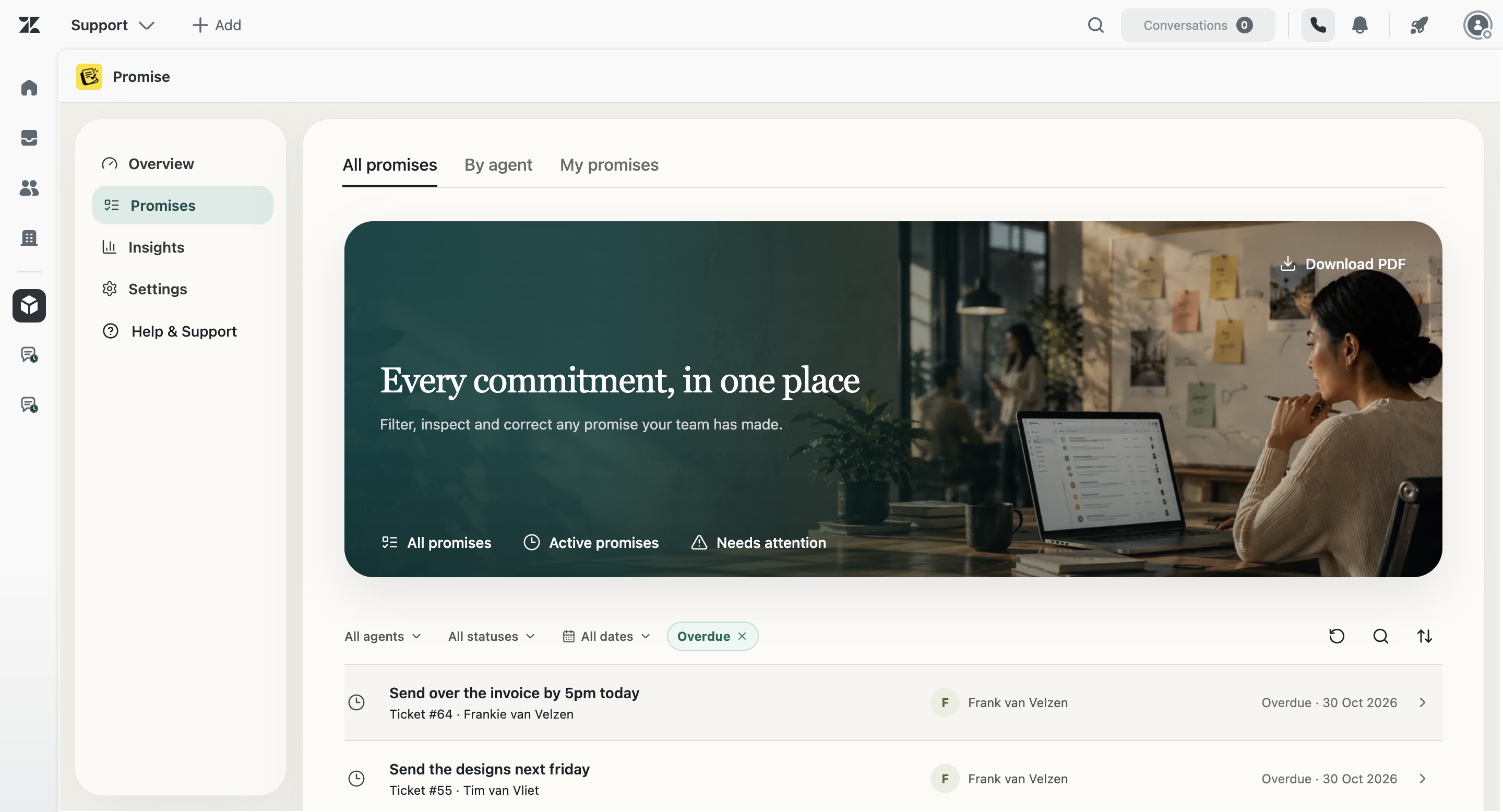
The personal promises view groups an agent’s commitments and supports status, date and search controls. Daily briefings and reminders reduce the need to reconstruct the day from tickets.
How Promise handles this in Zendesk
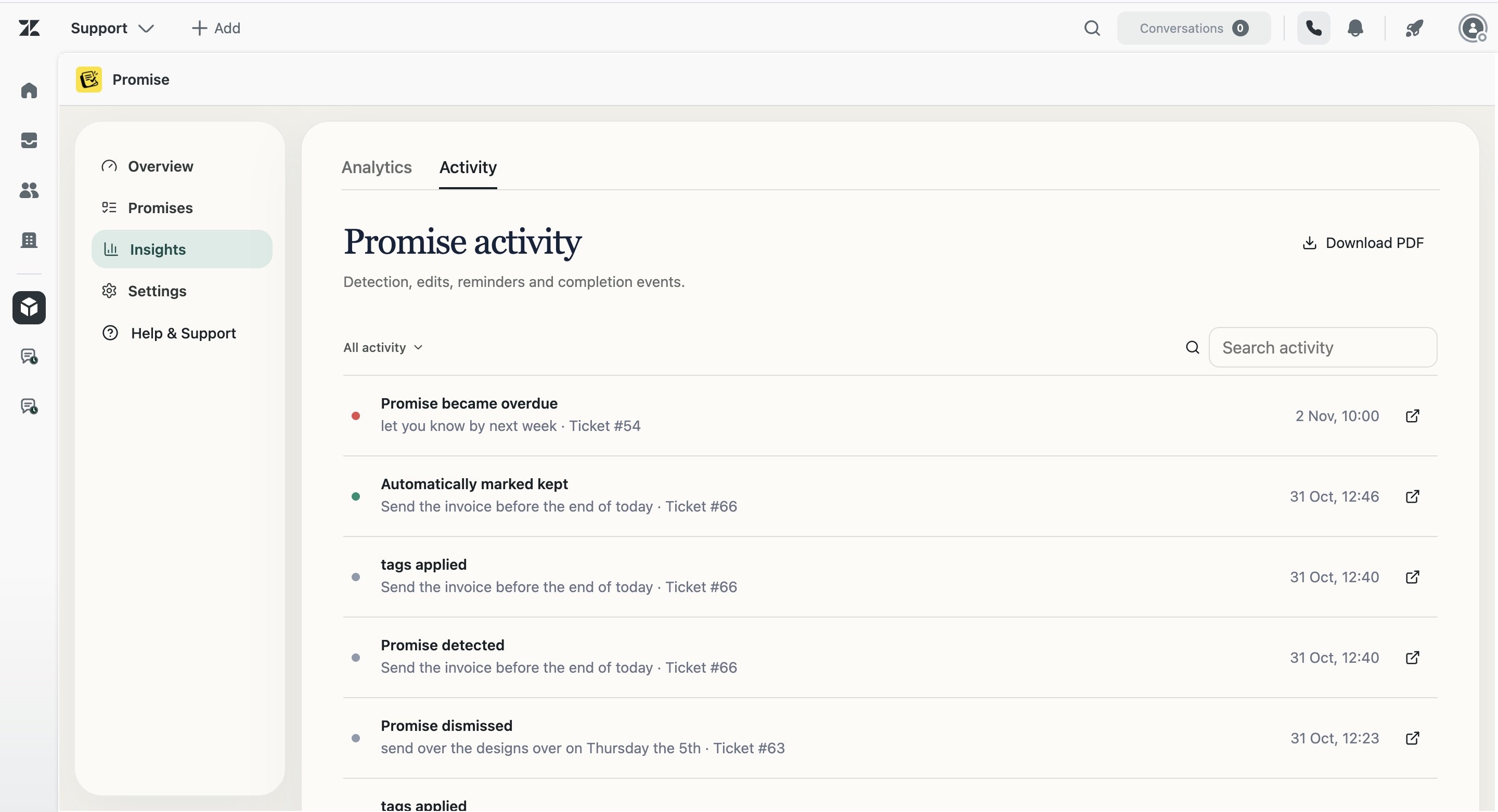
Promise is built around the commitment as a separate operational object. It keeps the original wording, a concise summary, owner, due date, status and source ticket together. Agents can review and correct the record. Managers can see team status and open the underlying ticket before acting.
Promise costs $5 per agent/month and is not yet live on the Zendesk Marketplace. AI results can be incomplete or incorrect, so the product supports human review rather than claiming perfect detection.
Examples from real support work
I’ll check with the warehouse and update you tomorrow.
I’ll ask engineering and come back to you Friday.
I’ll confirm with the hotel and update you this afternoon.
I’ll contact the carrier and send the latest status tomorrow.
Questions about remember customer promises
Are calendar reminders enough?
They can help an individual, but team visibility and ticket context may remain separate.
Should agents avoid making promises?
No. They should make realistic, specific commitments and use a reliable tracking process.
Can Promise show only my commitments?
Yes. A personal promises view is verified.