
Common SaaS commitments
“I’ll ask engineering and come back Friday,” “I’ll send the migration steps today,” and “I’ll confirm whether the fix is in production” each create a customer-facing obligation.
Dependency discipline
Engineering work may not fit a support promise. Separate the internal delivery estimate from the date the support agent will update the customer.
Using Promise
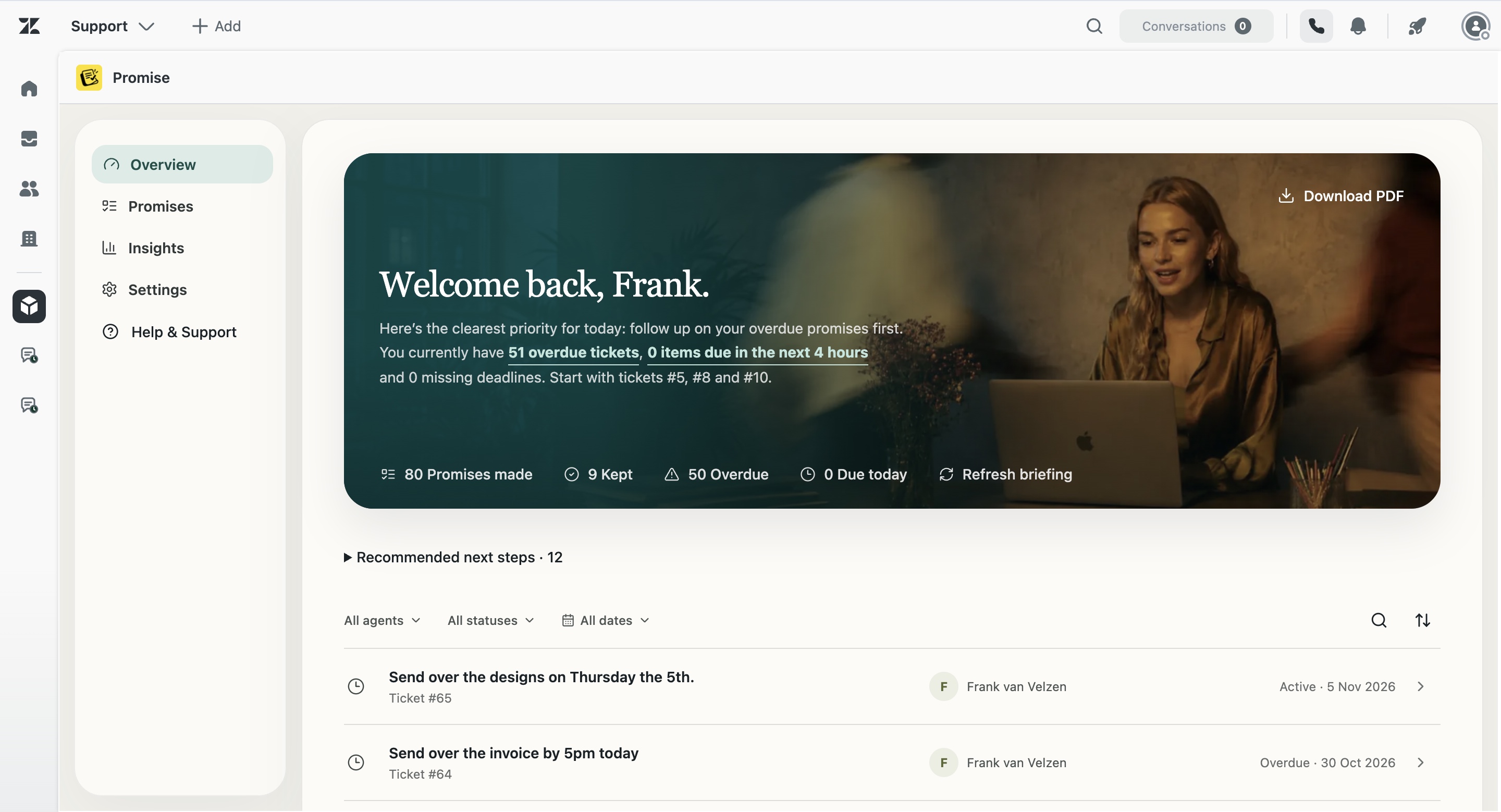
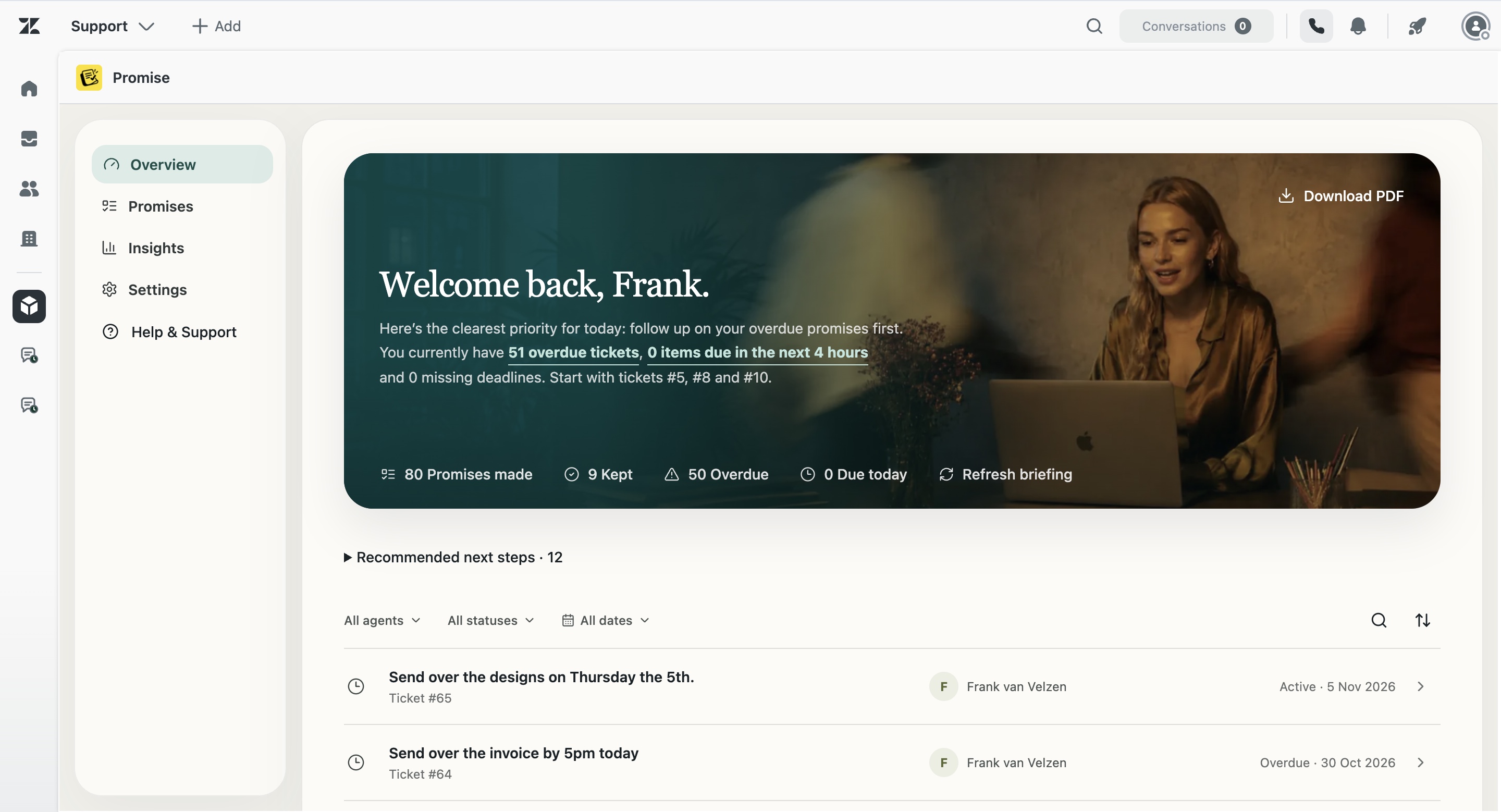
Promise keeps the commitment and Zendesk ticket connected while the engineering work proceeds elsewhere. The manager view helps identify customer updates that are approaching their deadline.
How Promise handles this in Zendesk
Promise is built around the commitment as a separate operational object. It keeps the original wording, a concise summary, owner, due date, status and source ticket together. Agents can review and correct the record. Managers can see team status and open the underlying ticket before acting.
Promise costs $5 per agent/month and is not yet live on the Zendesk Marketplace. AI results can be incomplete or incorrect, so the product supports human review rather than claiming perfect detection.
Examples from real support work
I’ll check with the warehouse and update you tomorrow.
I’ll ask engineering and come back to you Friday.
I’ll confirm with the hotel and update you this afternoon.
I’ll contact the carrier and send the latest status tomorrow.
Questions about SaaS customer commitments
Does Promise replace an issue tracker?
No. It tracks the customer-facing commitment, not the engineering backlog.
What if engineering has no estimate?
Promise a next update time rather than a fix date.
Can the source Zendesk ticket be opened from Promise?
Yes.