
Policy dates and conversation dates
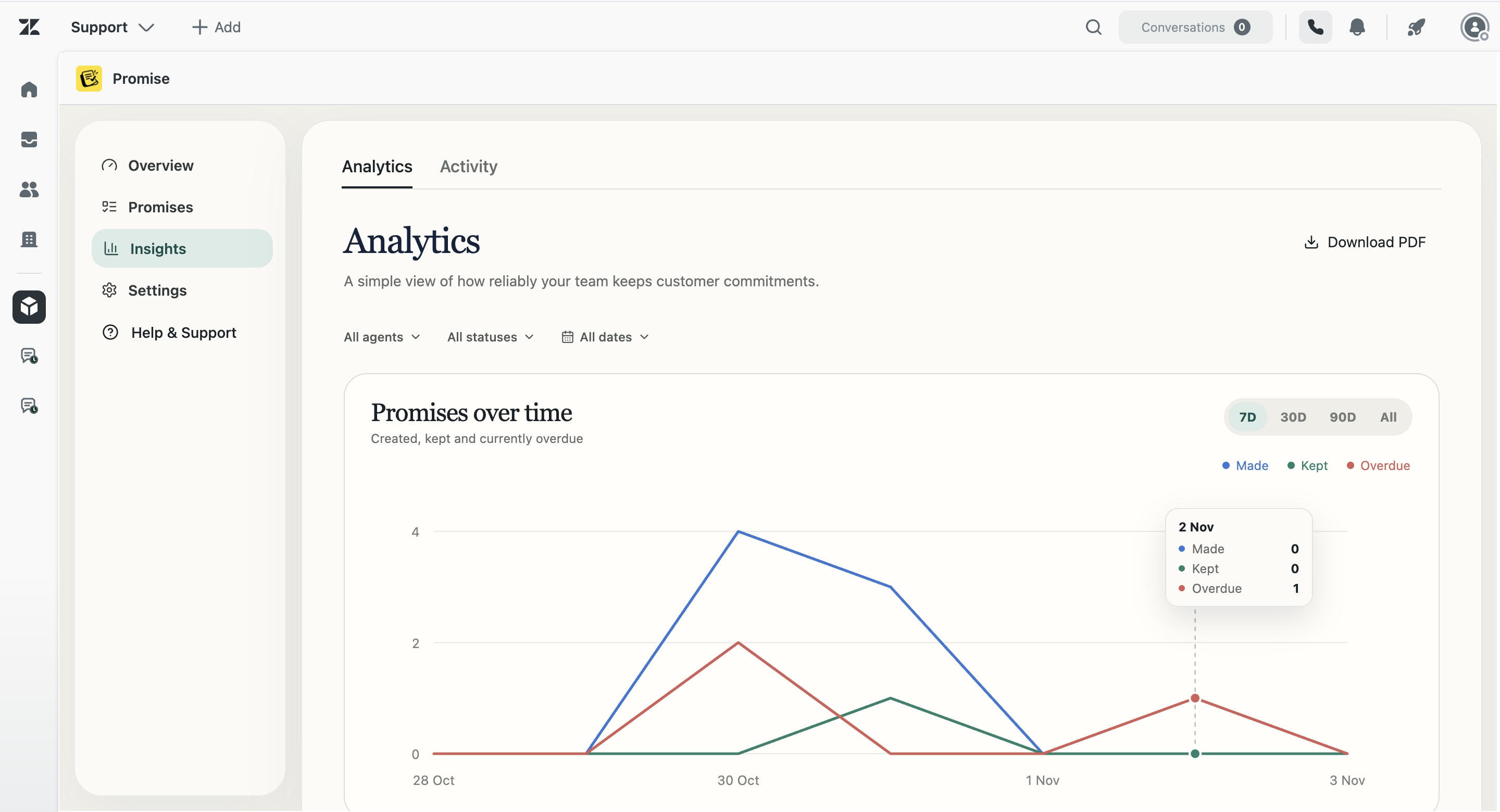
SLA deadlines come from policies. Commitment deadlines emerge from the case. Teams need both views because a ticket can be within SLA while a promised action is late.
Design for uncertainty
When an outcome depends on a supplier or engineering team, set a deadline for the next customer update rather than promising the final result. Preserve both the dependency and the customer-facing expectation.
Operational review
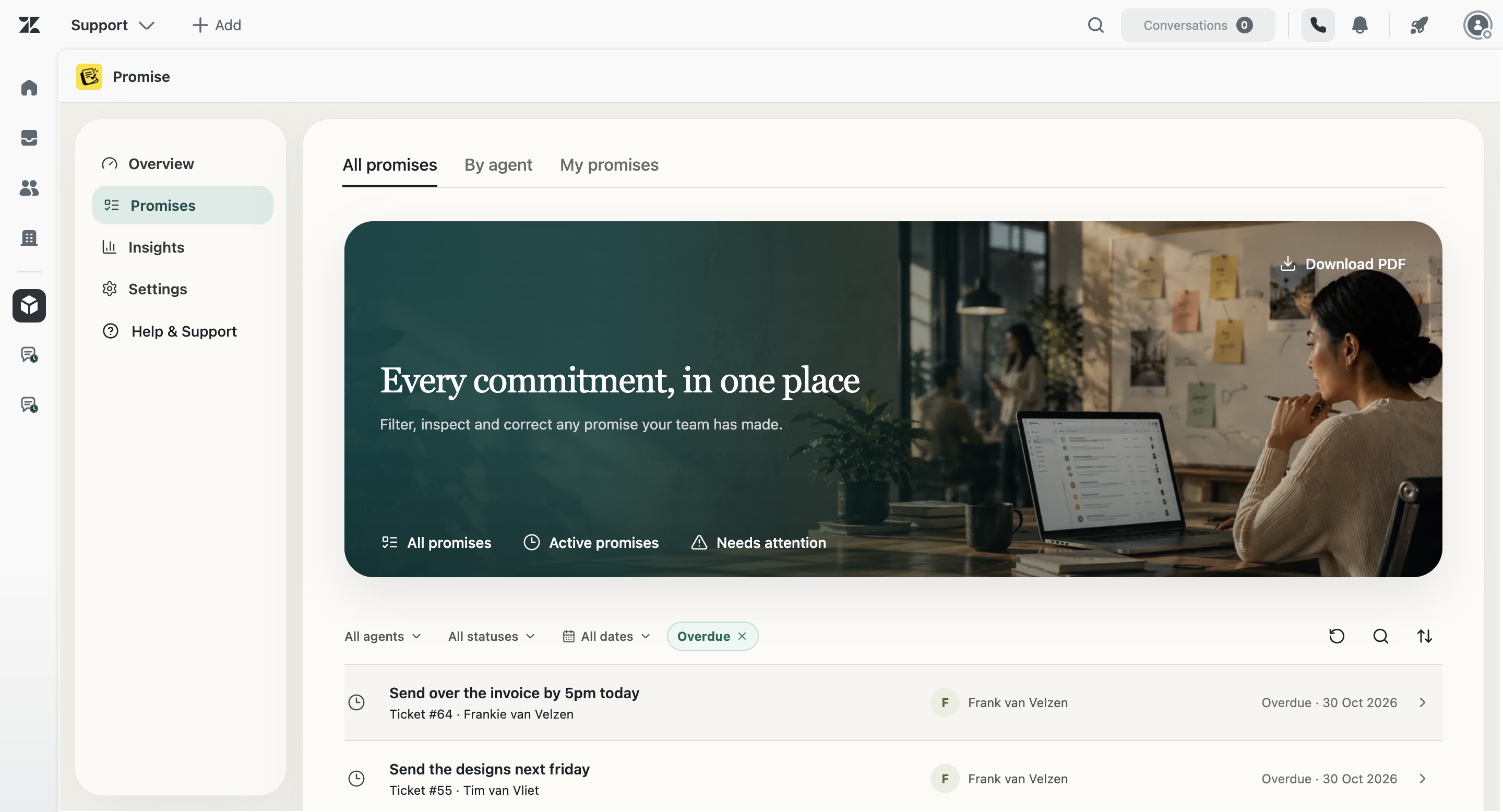
Group deadlines into due soon, due today and overdue. Check missing deadlines separately. Use reminder timing and grace periods that reflect the work rather than one universal rule.
How Promise handles this in Zendesk
Promise is built around the commitment as a separate operational object. It keeps the original wording, a concise summary, owner, due date, status and source ticket together. Agents can review and correct the record. Managers can see team status and open the underlying ticket before acting.
Promise costs $5 per agent/month and is not yet live on the Zendesk Marketplace. AI results can be incomplete or incorrect, so the product supports human review rather than claiming perfect detection.
Examples from real support work
I’ll check with the warehouse and update you tomorrow.
I’ll ask engineering and come back to you Friday.
I’ll confirm with the hotel and update you this afternoon.
I’ll contact the carrier and send the latest status tomorrow.
Questions about support deadline management
What is a missing deadline?
A valid commitment record that has no usable due date yet.
Should all deadlines use business hours?
That depends on the team and customer promise; configure rules deliberately.
Can deadline tracking replace escalation policy?
No. It should connect to a clear escalation path.