
Good wording
“I’ll check with the warehouse today and update you by 10am tomorrow.” The action and update time are both clear, without promising an outcome the agent cannot control.
Risky wording
“I promise the refund will be in your account tomorrow.” This may depend on a payment provider. Safer wording is to promise the next confirmed update, not an outcome outside the team’s control.
Incomplete wording
“I’ll look into it” owns an action but gives the customer no return point. Add a realistic time: “I’ll look into it and update you by the end of today.”
How Promise handles this in Zendesk
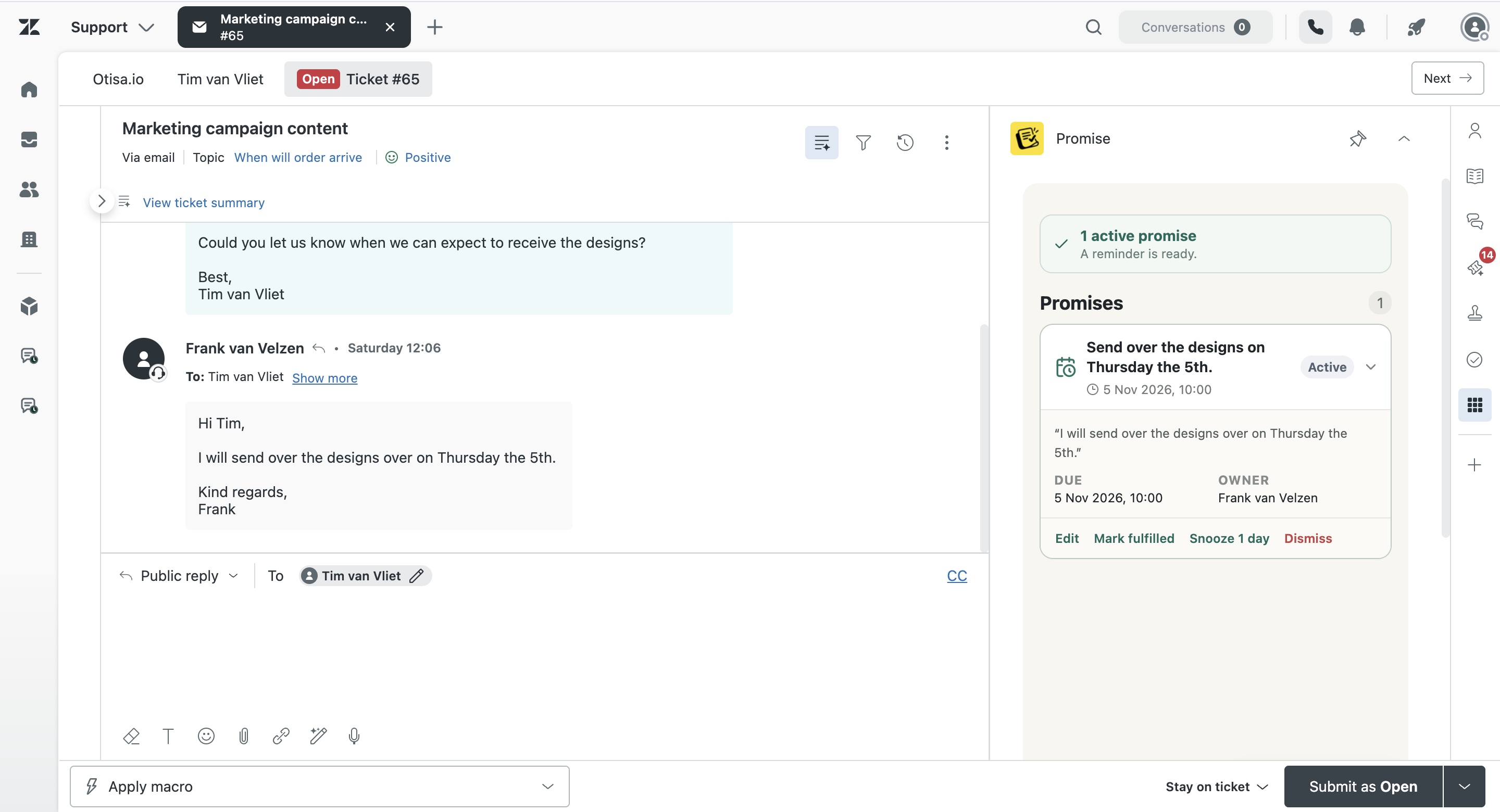
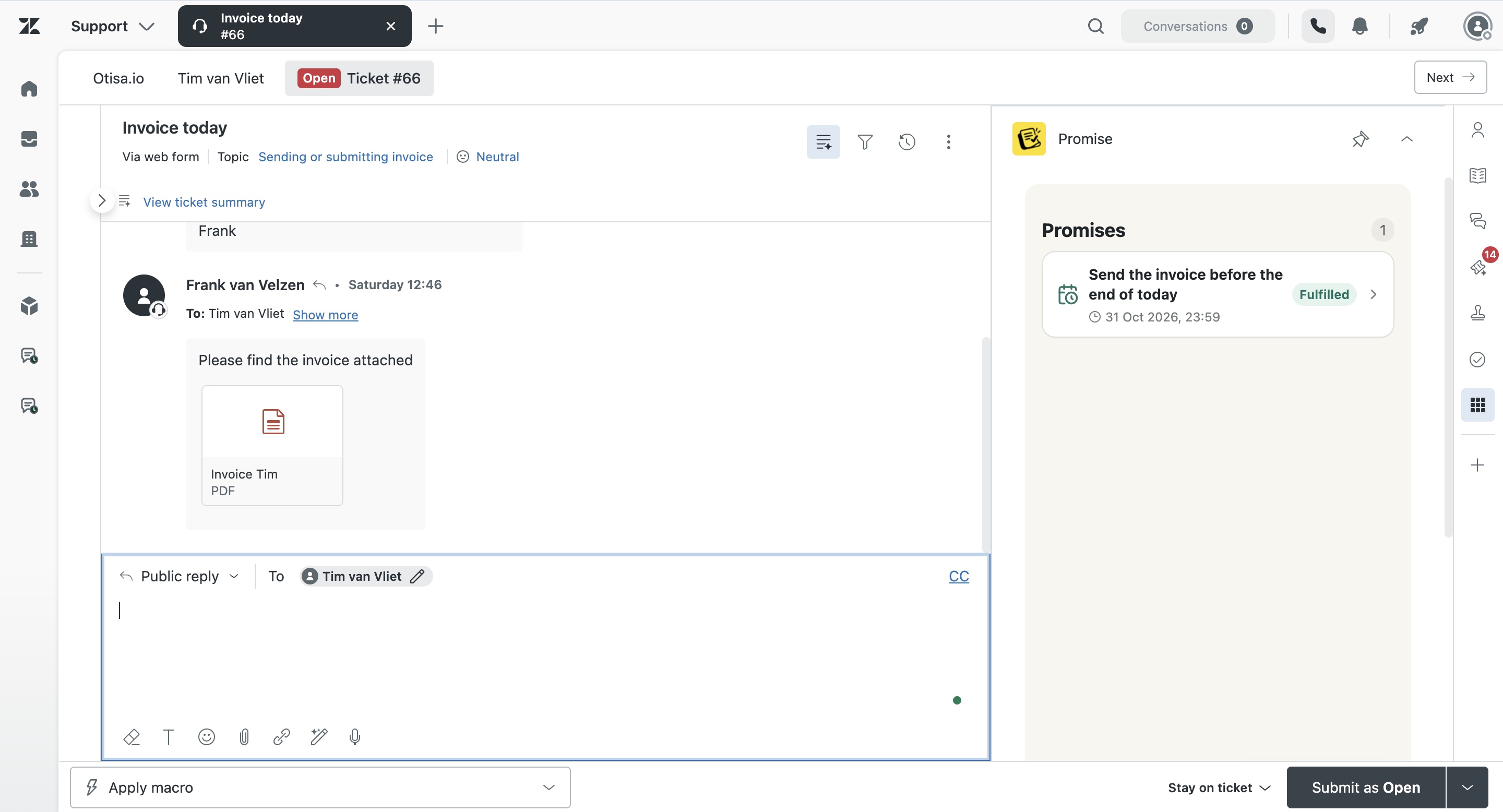
Promise is built around the commitment as a separate operational object. It keeps the original wording, a concise summary, owner, due date, status and source ticket together. Agents can review and correct the record. Managers can see team status and open the underlying ticket before acting.
Promise costs $5 per agent/month and is not yet live on the Zendesk Marketplace. AI results can be incomplete or incorrect, so the product supports human review rather than claiming perfect detection.
Examples from real support work
I’ll check with the warehouse and update you tomorrow.
I’ll ask engineering and come back to you Friday.
I’ll confirm with the hotel and update you this afternoon.
I’ll contact the carrier and send the latest status tomorrow.
Questions about support promise examples
Should agents avoid the word “promise”?
The exact word is less important than the expectation created by the sentence.
Can an agent promise an update instead of a resolution?
Yes. That is often safer when completion depends on another party.
How specific should the time be?
Specific enough that both customer and team know when the next update is due.