
Team checklist
Define commitment examples, agree how relative dates are handled, require an owner, review missing deadlines, scan due-today and overdue work, document escalation paths and audit a sample of dismissed records.
Daily rhythm
Agents review personal commitments at shift start and before handover. Managers review team risk and blockers. The team uses the original ticket for customer updates instead of maintaining a parallel conversation.
Improve the process
Track false positives, missing deadlines and recurring dependency types. Use those findings to improve writing guidance and workflows, not to invent unsupported performance benchmarks.
How Promise handles this in Zendesk
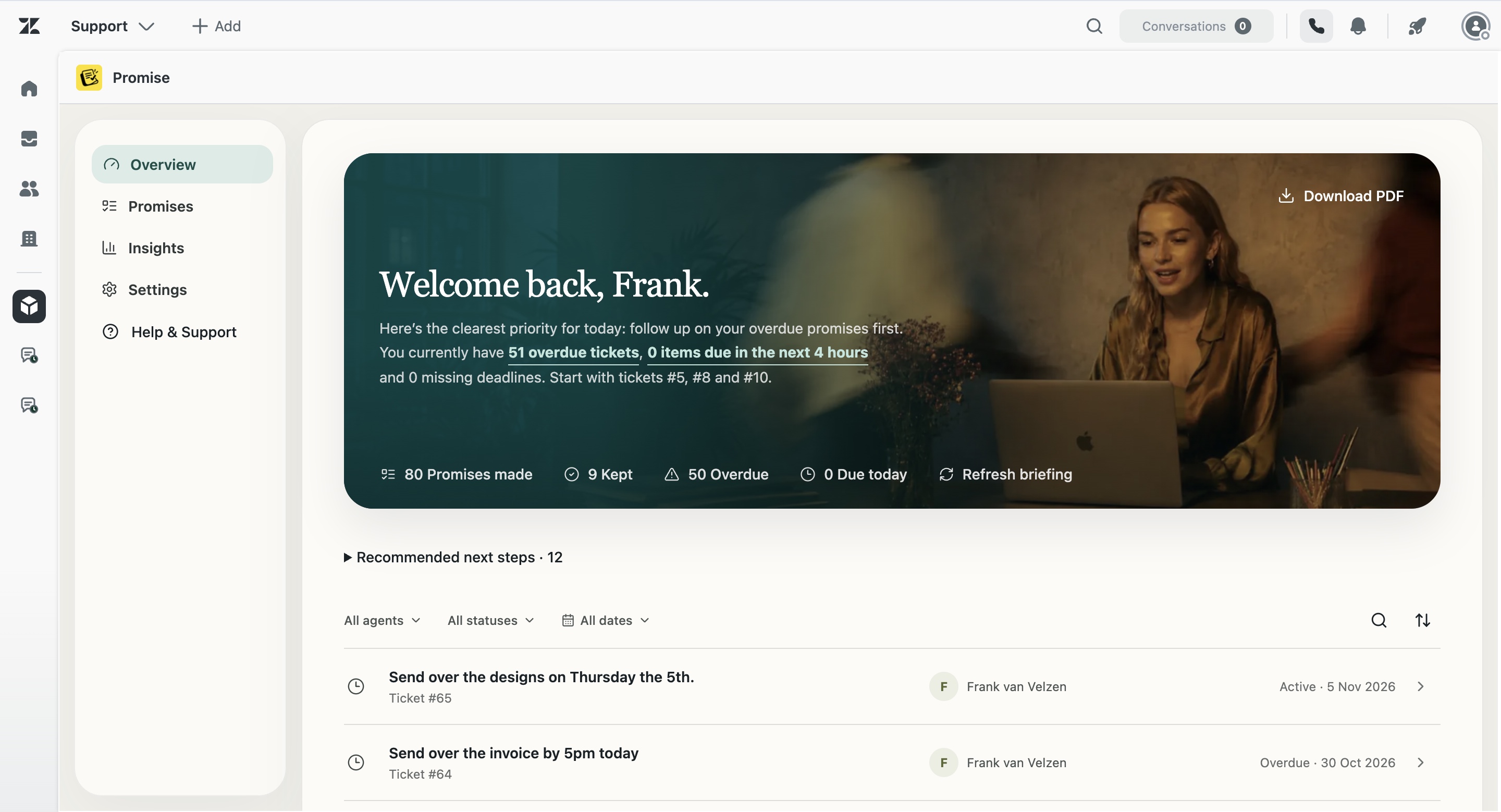
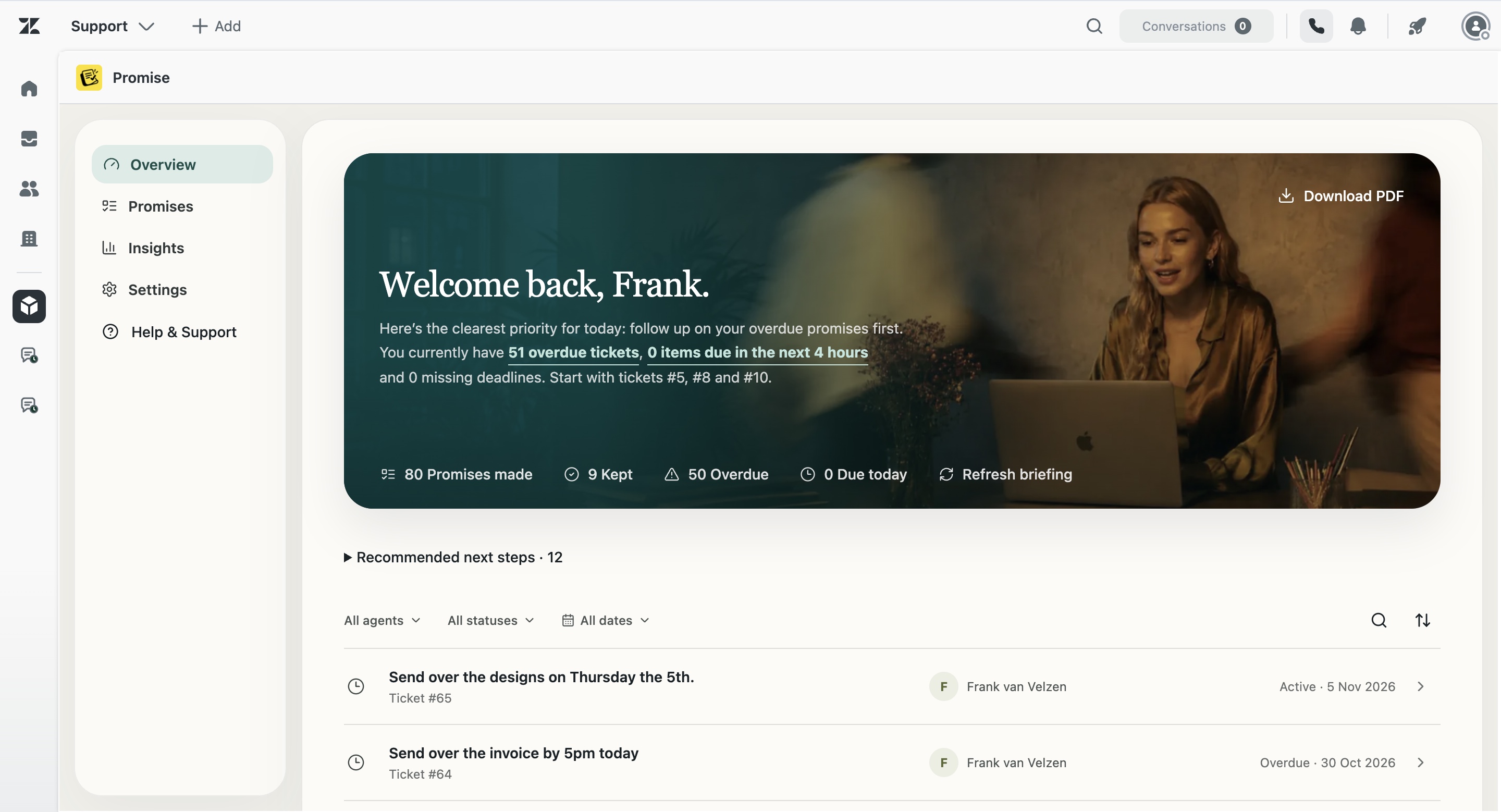
Promise is built around the commitment as a separate operational object. It keeps the original wording, a concise summary, owner, due date, status and source ticket together. Agents can review and correct the record. Managers can see team status and open the underlying ticket before acting.
Promise costs $5 per agent/month and is not yet live on the Zendesk Marketplace. AI results can be incomplete or incorrect, so the product supports human review rather than claiming perfect detection.
Examples from real support work
I’ll check with the warehouse and update you tomorrow.
I’ll ask engineering and come back to you Friday.
I’ll confirm with the hotel and update you this afternoon.
I’ll contact the carrier and send the latest status tomorrow.
Questions about support team follow-up process
Who owns the process?
Support operations usually defines it, while agents and managers maintain the daily workflow.
How often should overdue work be reviewed?
At least daily for most teams, with faster review for time-sensitive operations.
Can Promise support handovers?
A shared team view and ticket links help another authorized teammate understand the obligation.