
Why the sentence matters
It can feel like ordinary conversational glue, but the customer hears a specific expectation. If it stays only in ticket prose, the team must rely on memory, ticket status or a personal reminder.
Turn it into a usable record
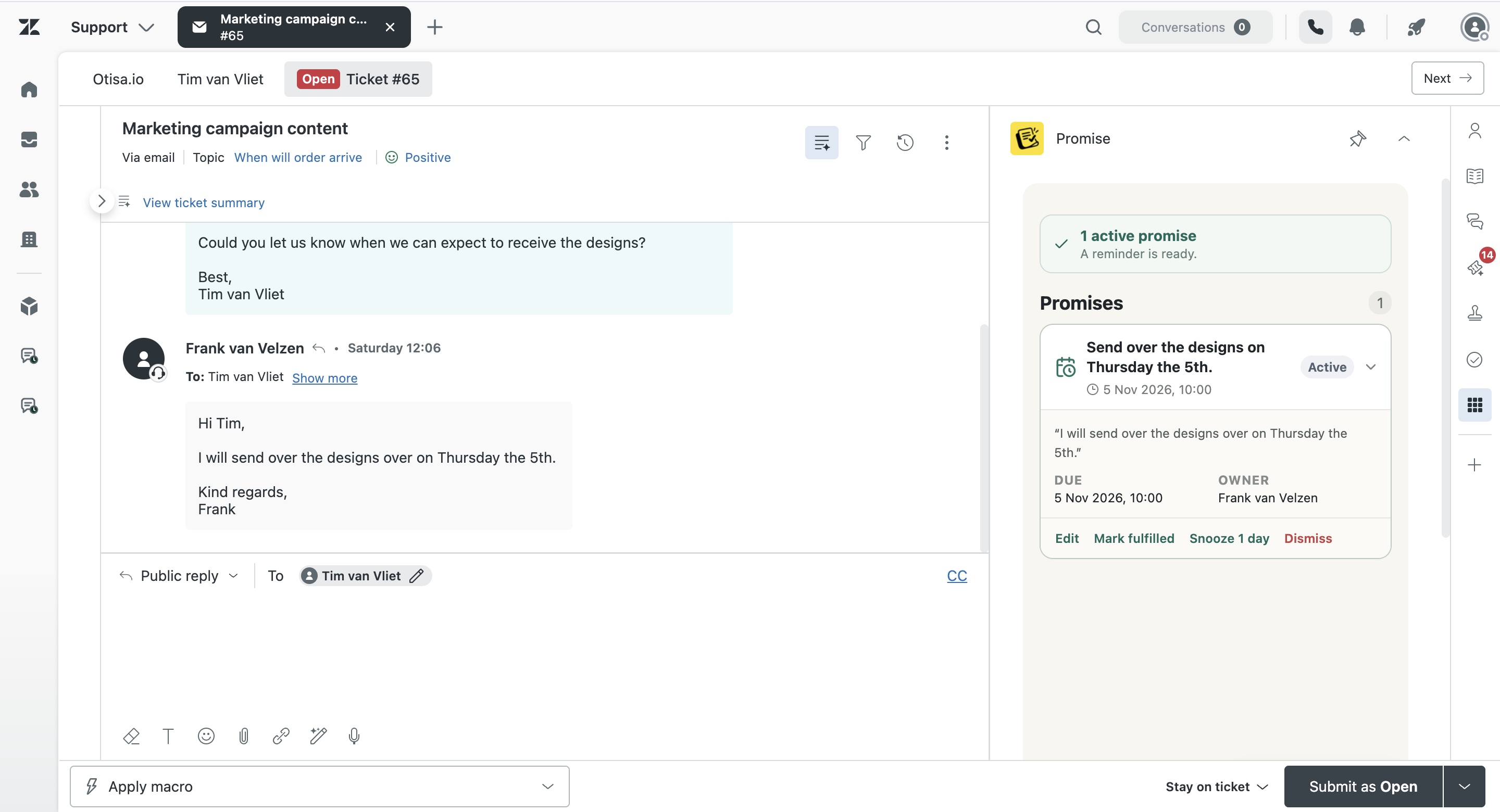
Keep the original sentence, resolve “tomorrow” using the correct timezone, assign the agent as owner, show the due time and link the record to the ticket. Let the agent correct the date if needed.
Promise handling
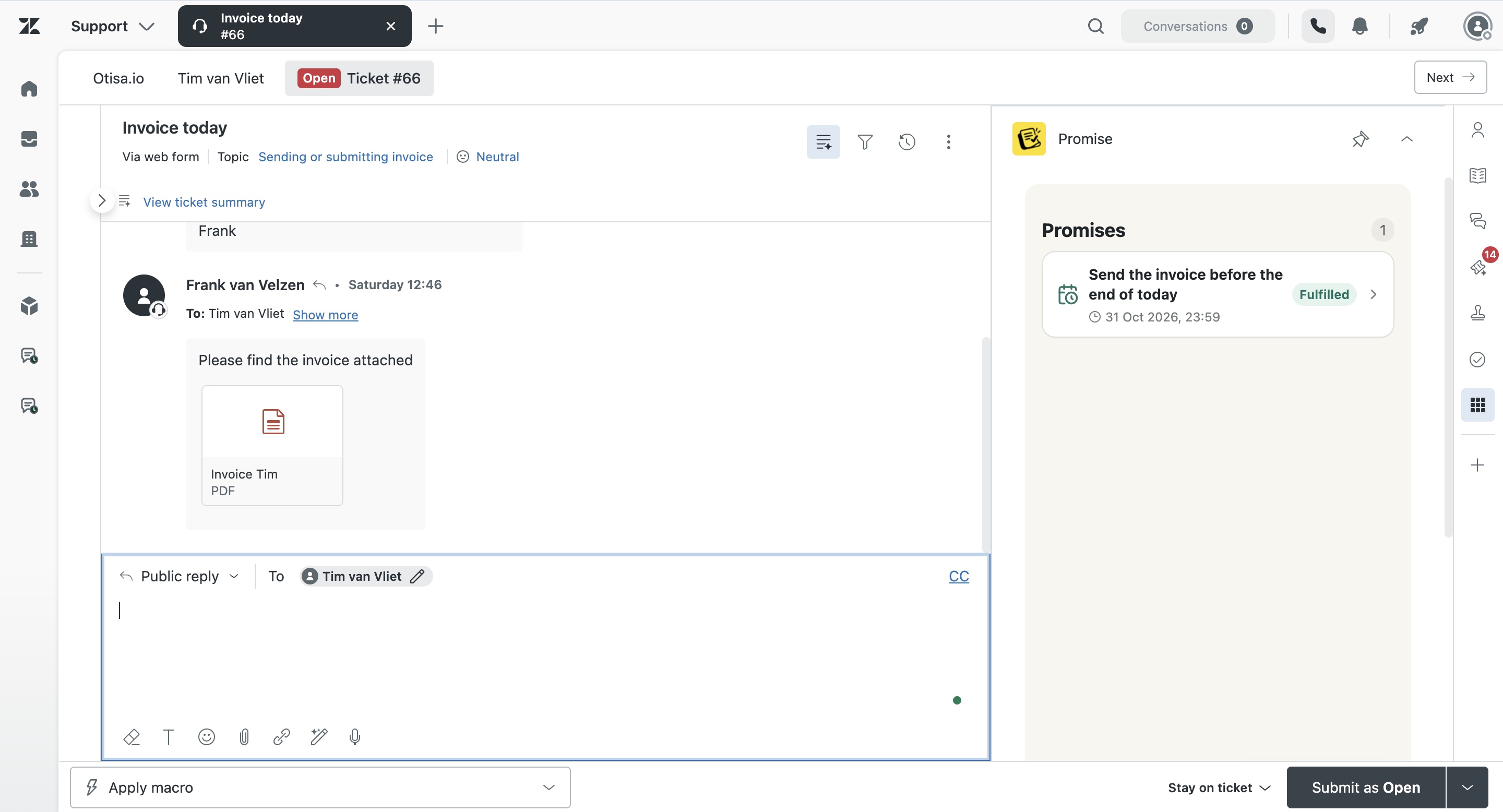
Promise can identify the commitment language and due phrase, then place the record in personal and team views. It can later be edited, dismissed or marked kept.
How Promise handles this in Zendesk
Promise is built around the commitment as a separate operational object. It keeps the original wording, a concise summary, owner, due date, status and source ticket together. Agents can review and correct the record. Managers can see team status and open the underlying ticket before acting.
Promise costs $5 per agent/month and is not yet live on the Zendesk Marketplace. AI results can be incomplete or incorrect, so the product supports human review rather than claiming perfect detection.
Examples from real support work
I’ll check with the warehouse and update you tomorrow.
I’ll ask engineering and come back to you Friday.
I’ll confirm with the hotel and update you this afternoon.
I’ll contact the carrier and send the latest status tomorrow.
Questions about track I’ll get back to you
Does “I’ll get back to you” count without a date?
Yes, it is still a commitment, but the record needs a practical deadline.
What timezone should “tomorrow” use?
Use the organization or user context configured for the support workflow and show the resolved date for review.
What if the agent cannot finish the action tomorrow?
They should update the customer by the promised time and set a new realistic expectation.