
Start with the system
If promises exist only in ticket prose, missed follow-ups are predictable. A shared tracking layer reduces reliance on memory and gives managers a chance to help before a date passes.
Use data carefully
An overdue count is not a complete performance judgment. Compare work type, promise clarity, external dependencies, agent availability and whether the detection itself was correct.
What Promise makes visible
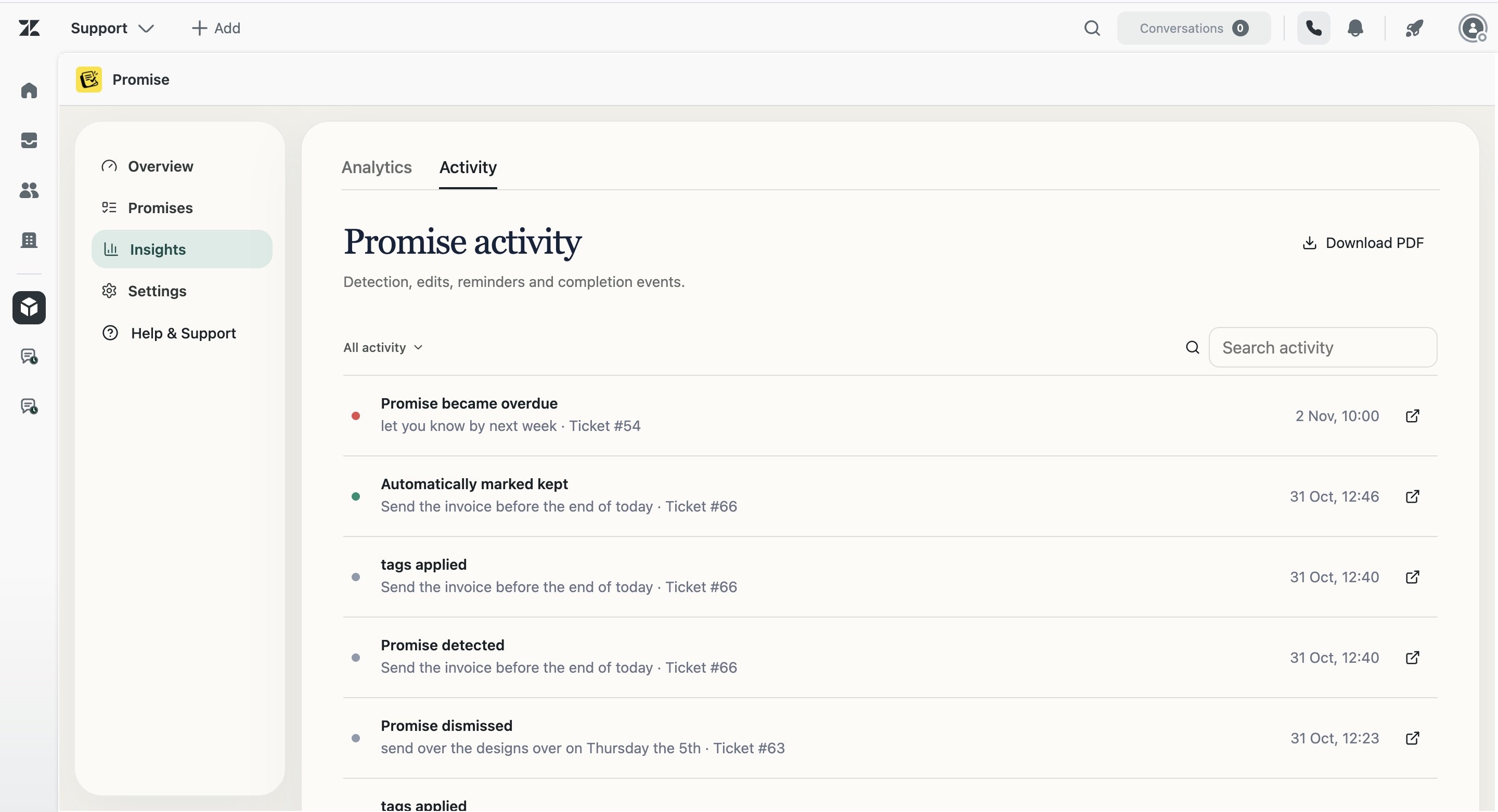
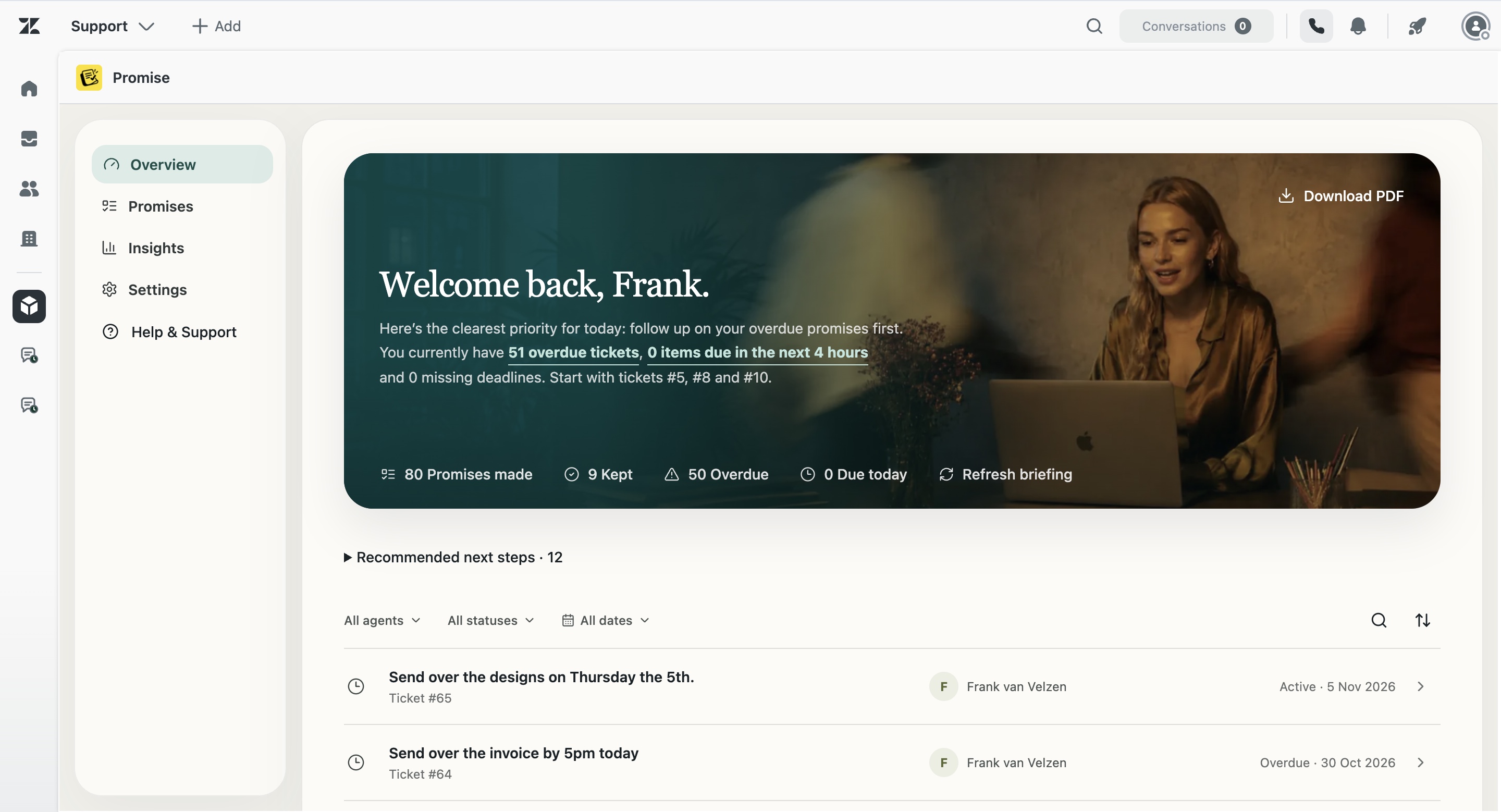
The team view shows commitments by agent, current status, deadline and source ticket. Editing, dismissal and activity history provide context. Managers can use the view for workload support and coaching, not only escalation.
How Promise handles this in Zendesk
Promise is built around the commitment as a separate operational object. It keeps the original wording, a concise summary, owner, due date, status and source ticket together. Agents can review and correct the record. Managers can see team status and open the underlying ticket before acting.
Promise costs $5 per agent/month and is not yet live on the Zendesk Marketplace. AI results can be incomplete or incorrect, so the product supports human review rather than claiming perfect detection.
Examples from real support work
I’ll check with the warehouse and update you tomorrow.
I’ll ask engineering and come back to you Friday.
I’ll confirm with the hotel and update you this afternoon.
I’ll contact the carrier and send the latest status tomorrow.
Questions about Zendesk agent accountability
Is Promise an employee-monitoring tool?
It tracks customer commitments associated with agents; organizations should govern access and provide appropriate workplace notice.
Can an incorrect detection be changed?
Yes. Authorized users can edit or dismiss it.
What should managers do with overdue items?
Review the ticket, identify the blocker and agree the next customer update.