
Four useful categories
SLA and routing tools keep service moving. QA tools improve interaction quality. Knowledge tools support accurate answers. Commitment tools keep customer-specific promises visible after the reply is sent.
Where Promise contributes
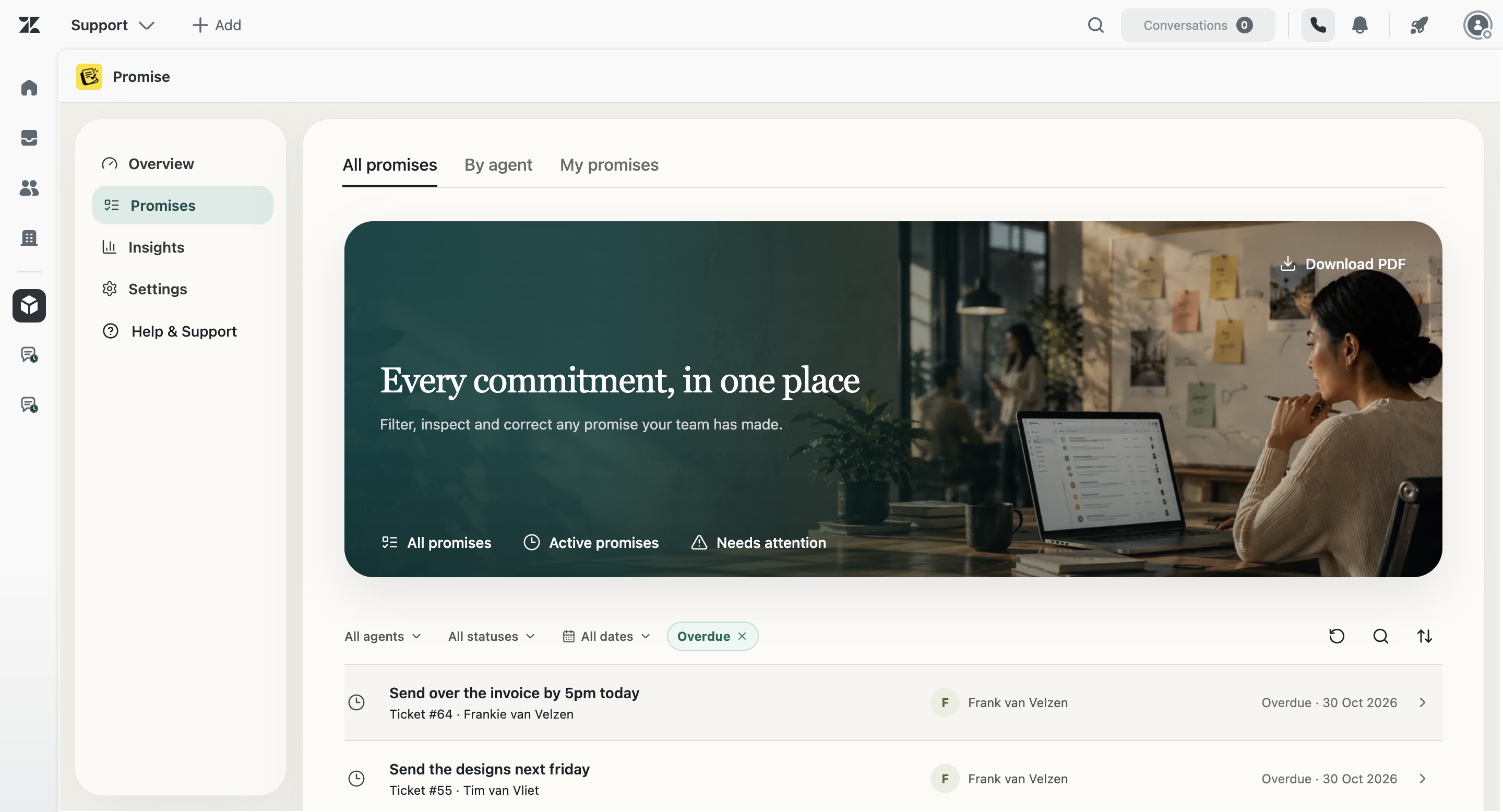
Promise focuses on the follow-through layer. It helps teams see when an agent said they would do something, when it is due and which ticket needs an update.
Evaluate behavior, not adjectives
Ask whether the tool reduces hidden obligations, makes corrections easy, keeps context near the ticket and supports managers without encouraging shallow rankings.
How Promise handles this in Zendesk
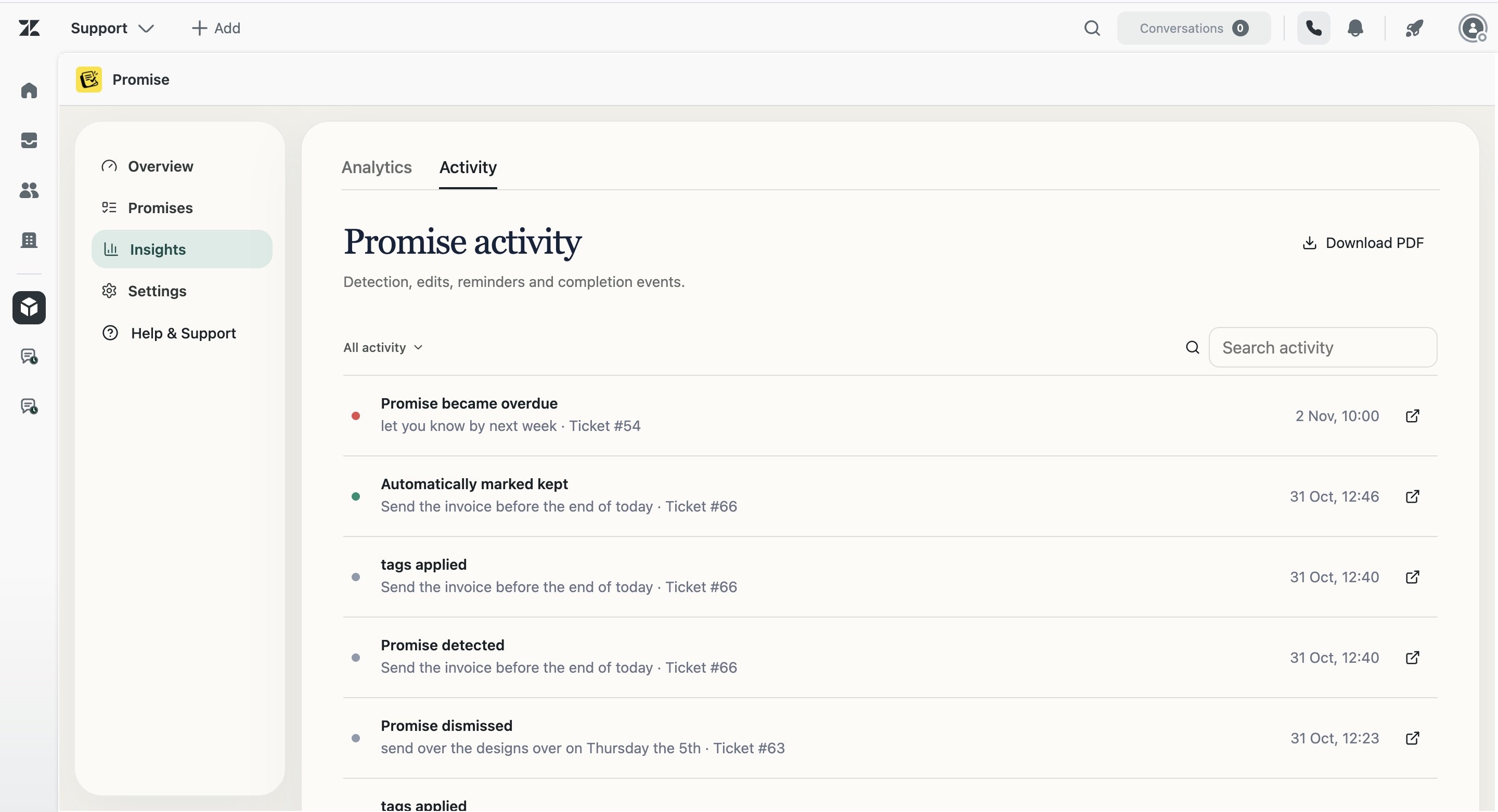
Promise is built around the commitment as a separate operational object. It keeps the original wording, a concise summary, owner, due date, status and source ticket together. Agents can review and correct the record. Managers can see team status and open the underlying ticket before acting.
Promise costs $5 per agent/month and is not yet live on the Zendesk Marketplace. AI results can be incomplete or incorrect, so the product supports human review rather than claiming perfect detection.
Examples from real support work
I’ll check with the warehouse and update you tomorrow.
I’ll ask engineering and come back to you Friday.
I’ll confirm with the hotel and update you this afternoon.
I’ll contact the carrier and send the latest status tomorrow.
Questions about Zendesk apps customer trust
Can an app create customer trust?
No. Tools support reliable practices; people and processes still determine the experience.
How is commitment tracking different from QA?
QA reviews interaction quality, while commitment tracking monitors specific future obligations.
Can Promise guarantee better CSAT?
No. No guaranteed customer metric is claimed.