
What makes these deadlines different
A policy deadline is known in advance. A conversational deadline is created while solving the case: tomorrow afternoon, before Friday or when a carrier confirms. It can be precise, relative or dependent on another event.
Working with relative dates
Interpret “tomorrow” using the correct timezone and current date, then show the resolved date to a person for review. Avoid hiding the original phrase; it is useful context if the interpretation is questioned later.
Promise deadline states
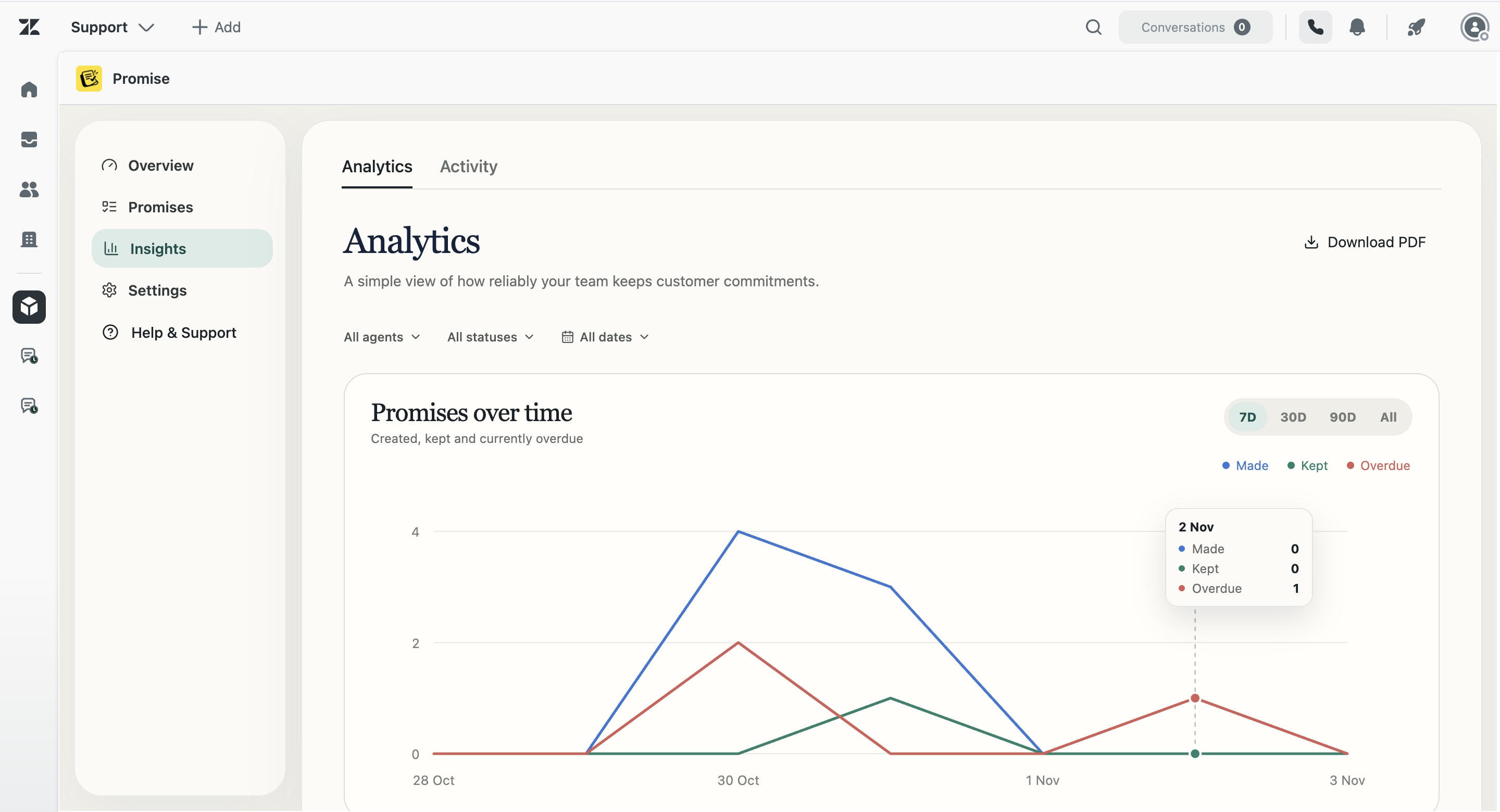
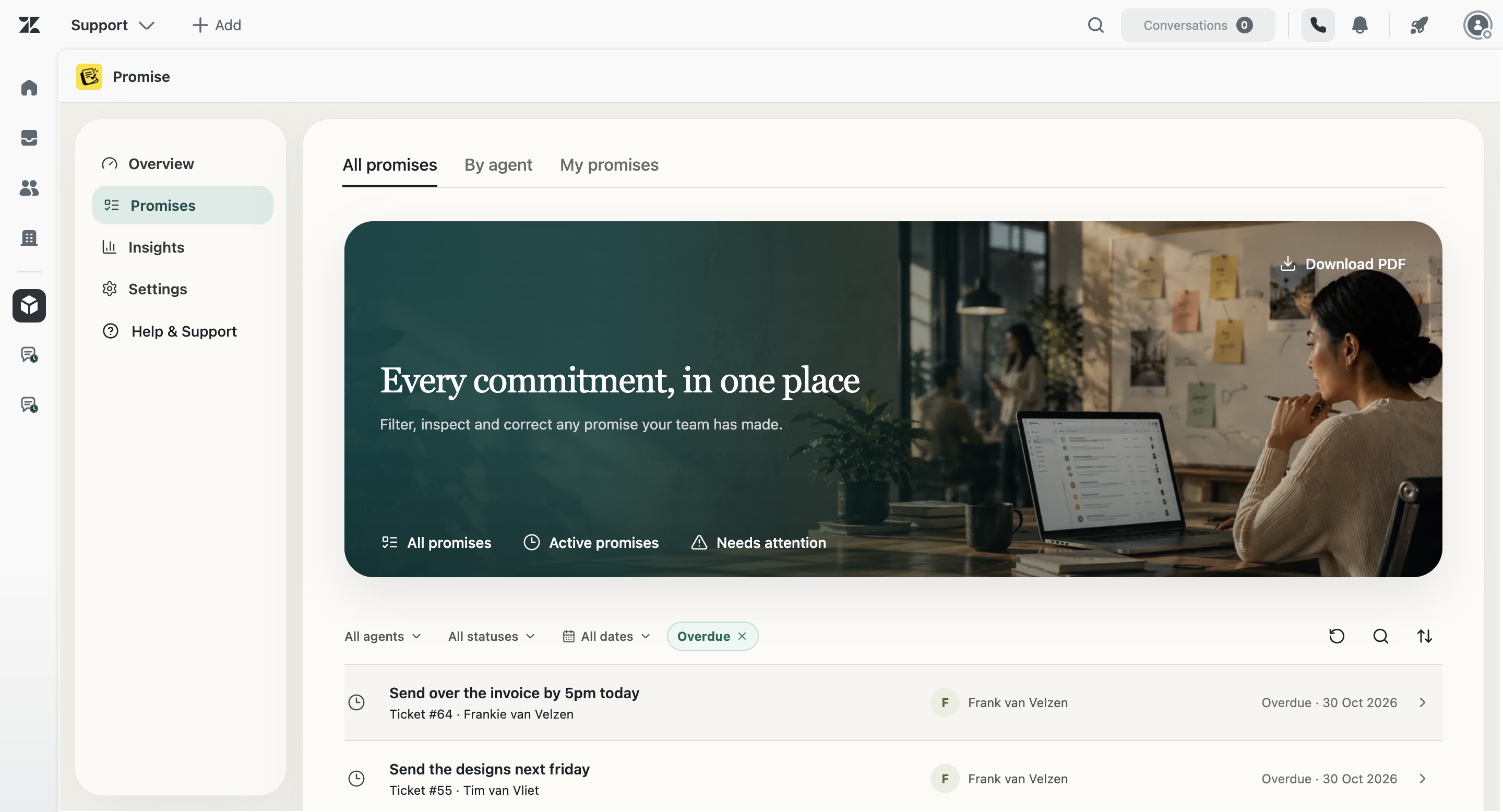
Promise distinguishes items due soon, due today and overdue, and allows a user to add or edit the due date. Settings define reminder offsets and overdue grace.
How Promise handles this in Zendesk
Promise is built around the commitment as a separate operational object. It keeps the original wording, a concise summary, owner, due date, status and source ticket together. Agents can review and correct the record. Managers can see team status and open the underlying ticket before acting.
Promise costs $5 per agent/month and is not yet live on the Zendesk Marketplace. AI results can be incomplete or incorrect, so the product supports human review rather than claiming perfect detection.
Examples from real support work
I’ll check with the warehouse and update you tomorrow.
I’ll ask engineering and come back to you Friday.
I’ll confirm with the hotel and update you this afternoon.
I’ll contact the carrier and send the latest status tomorrow.
Questions about Zendesk deadline tracking
Can Promise extract “tomorrow” from a reply?
The detection contract includes due phrases and resolved dates, but the result should be reviewed.
What if a promise has no date?
Promise can show the item as needing a deadline.
Can a manager filter by date?
Yes. The compiled product includes date-range filtering.