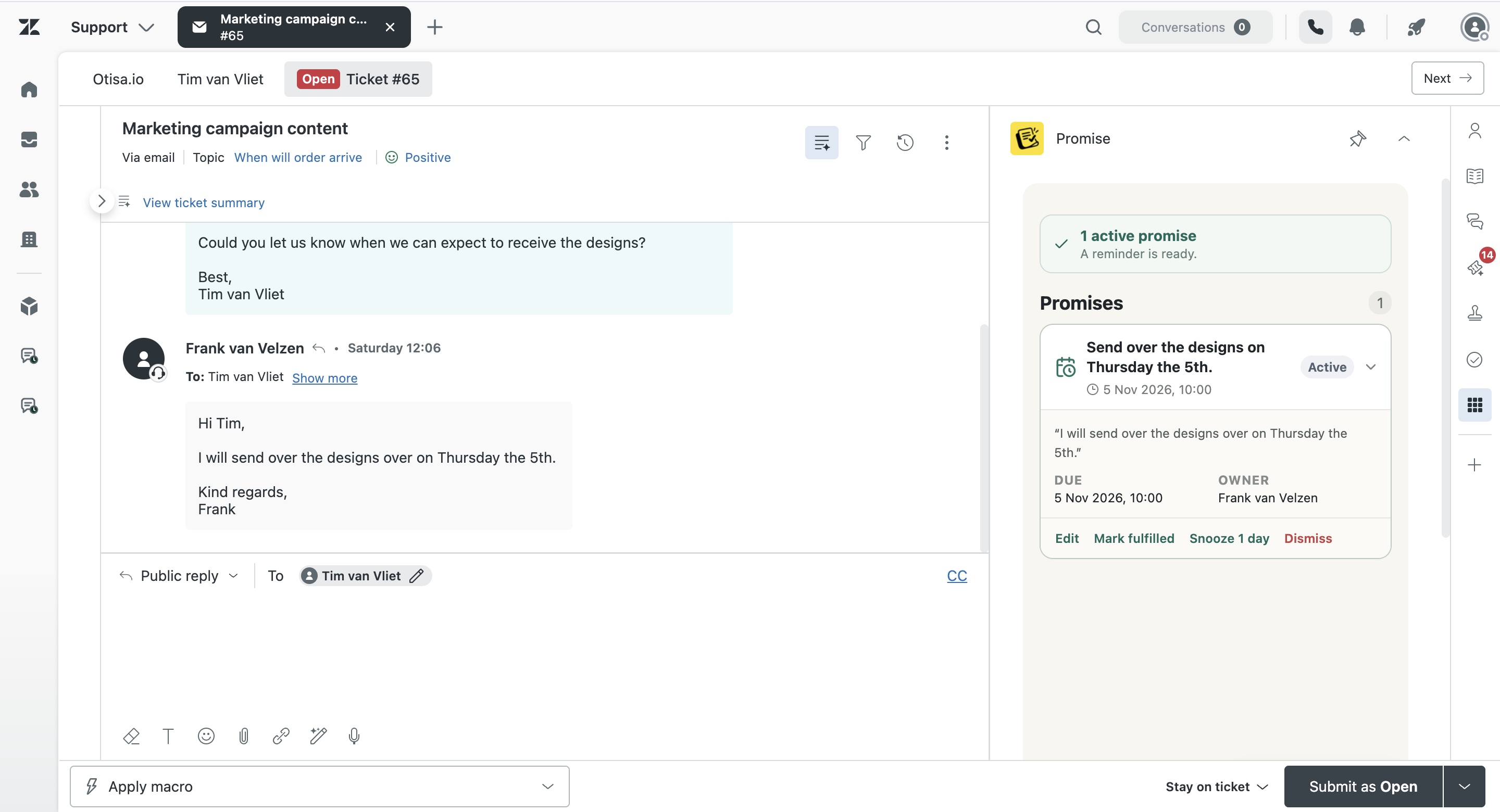

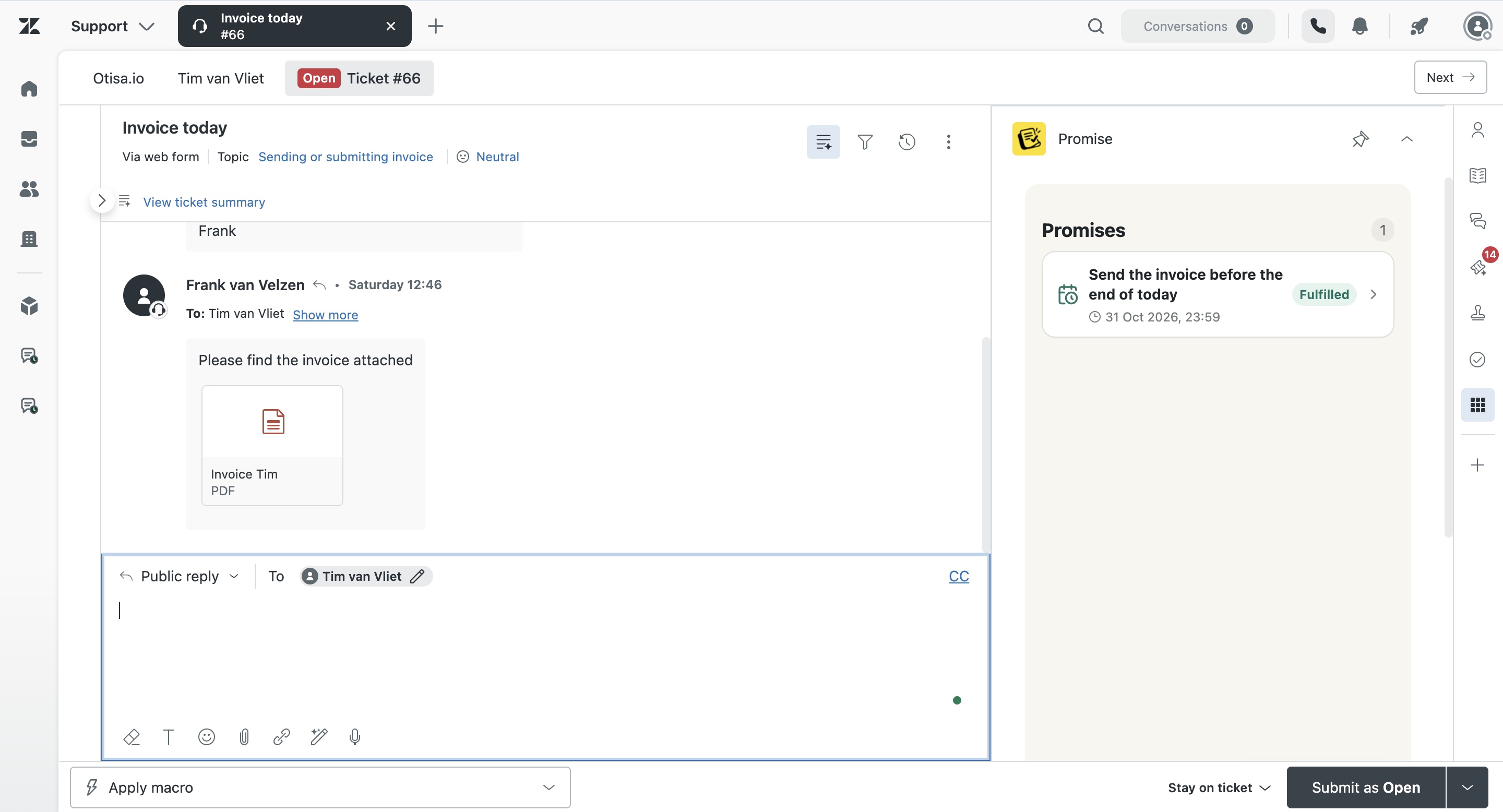
Three necessary fields
Keep the action, owner and deadline together. Also preserve the original wording and source ticket so a colleague can understand the expectation.
Common promised follow-ups
Invoice corrections, replacement status, engineering updates, refund confirmation, booking checks, carrier updates and migration instructions all create trackable obligations.
Lifecycle
Detect or record the promise, review the deadline, monitor it in the agent and team view, return to the ticket, complete or update the customer and mark the record accordingly.
How Promise handles this in Zendesk
Promise is built around the commitment as a separate operational object. It keeps the original wording, a concise summary, owner, due date, status and source ticket together. Agents can review and correct the record. Managers can see team status and open the underlying ticket before acting.
Promise costs $5 per agent/month and is not yet live on the Zendesk Marketplace. AI results can be incomplete or incorrect, so the product supports human review rather than claiming perfect detection.
Examples from real support work
I’ll check with the warehouse and update you tomorrow.
I’ll ask engineering and come back to you Friday.
I’ll confirm with the hotel and update you this afternoon.
I’ll contact the carrier and send the latest status tomorrow.
Questions about Zendesk promised follow-up
Is every follow-up a promise?
Not always. A promise exists when the customer is given a reasonable expectation of future action.
Can the promised follow-up depend on another team?
Yes. The agent can still own the commitment to update the customer.
How is it closed?
Complete the action or communicate the new status, then update the commitment record.