
Task view
“Check refund status” is an internal task. It may be assigned, scheduled and completed without retaining what the customer was told.
Commitment view
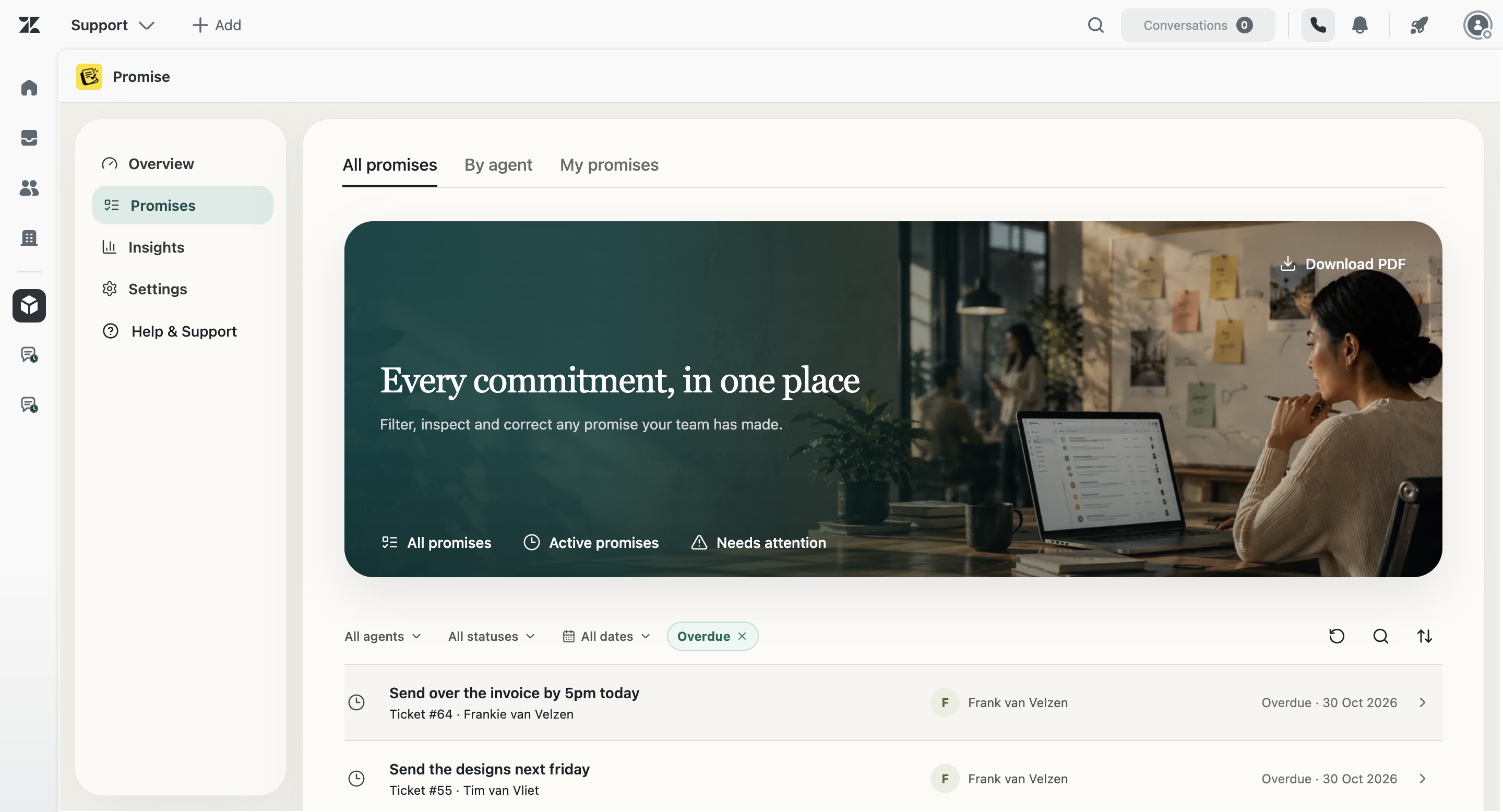
“I’ll confirm the refund tomorrow” preserves the customer-facing wording and due expectation. That context matters when the team decides whether an update is late.
Choosing a system
Use task management for broader operational work. Add commitment tracking when work originates in a customer conversation and the communicated expectation must remain visible.
How Promise handles this in Zendesk
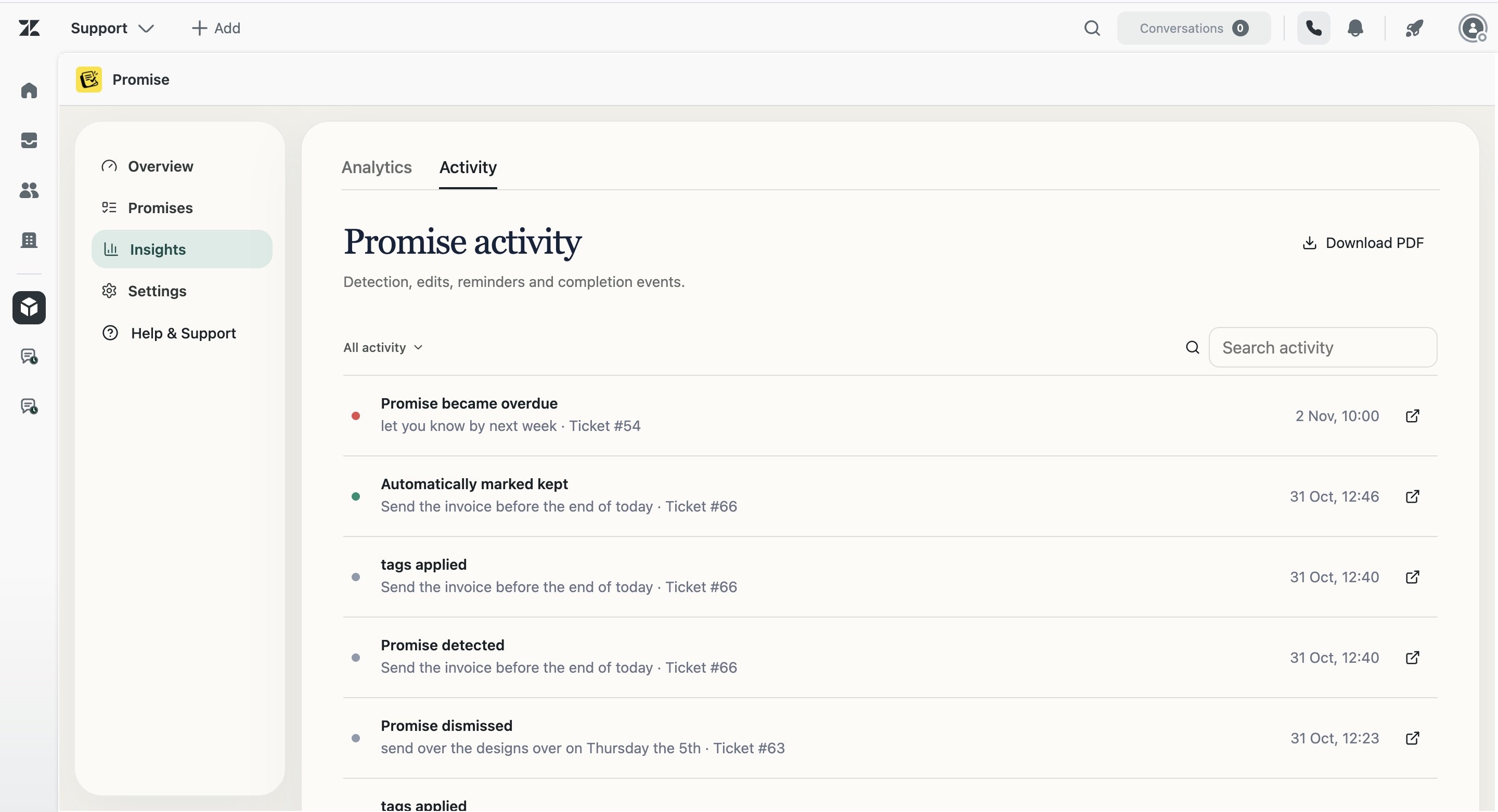
Promise is built around the commitment as a separate operational object. It keeps the original wording, a concise summary, owner, due date, status and source ticket together. Agents can review and correct the record. Managers can see team status and open the underlying ticket before acting.
Promise costs $5 per agent/month and is not yet live on the Zendesk Marketplace. AI results can be incomplete or incorrect, so the product supports human review rather than claiming perfect detection.
Examples from real support work
I’ll check with the warehouse and update you tomorrow.
I’ll ask engineering and come back to you Friday.
I’ll confirm with the hotel and update you this afternoon.
I’ll contact the carrier and send the latest status tomorrow.
Questions about Zendesk task management
Can every commitment be represented as a task?
Technically yes, but a generic task may omit the customer wording and source context.
Is Promise a project-management tool?
No. It is focused on customer commitments inside Zendesk.
Can teams use both?
Yes. Keep the customer obligation in Promise and manage larger cross-functional work in the appropriate task system.