
Rule-based strength
Triggers can apply consistent actions when ticket fields, forms or tags match known conditions. They are predictable and administratively controlled.
Free-text gap
The sentence “I’ll send the corrected invoice tomorrow” may not set a structured field by itself. Capturing it with rules requires agents to add a tag or field consistently.
Combined design
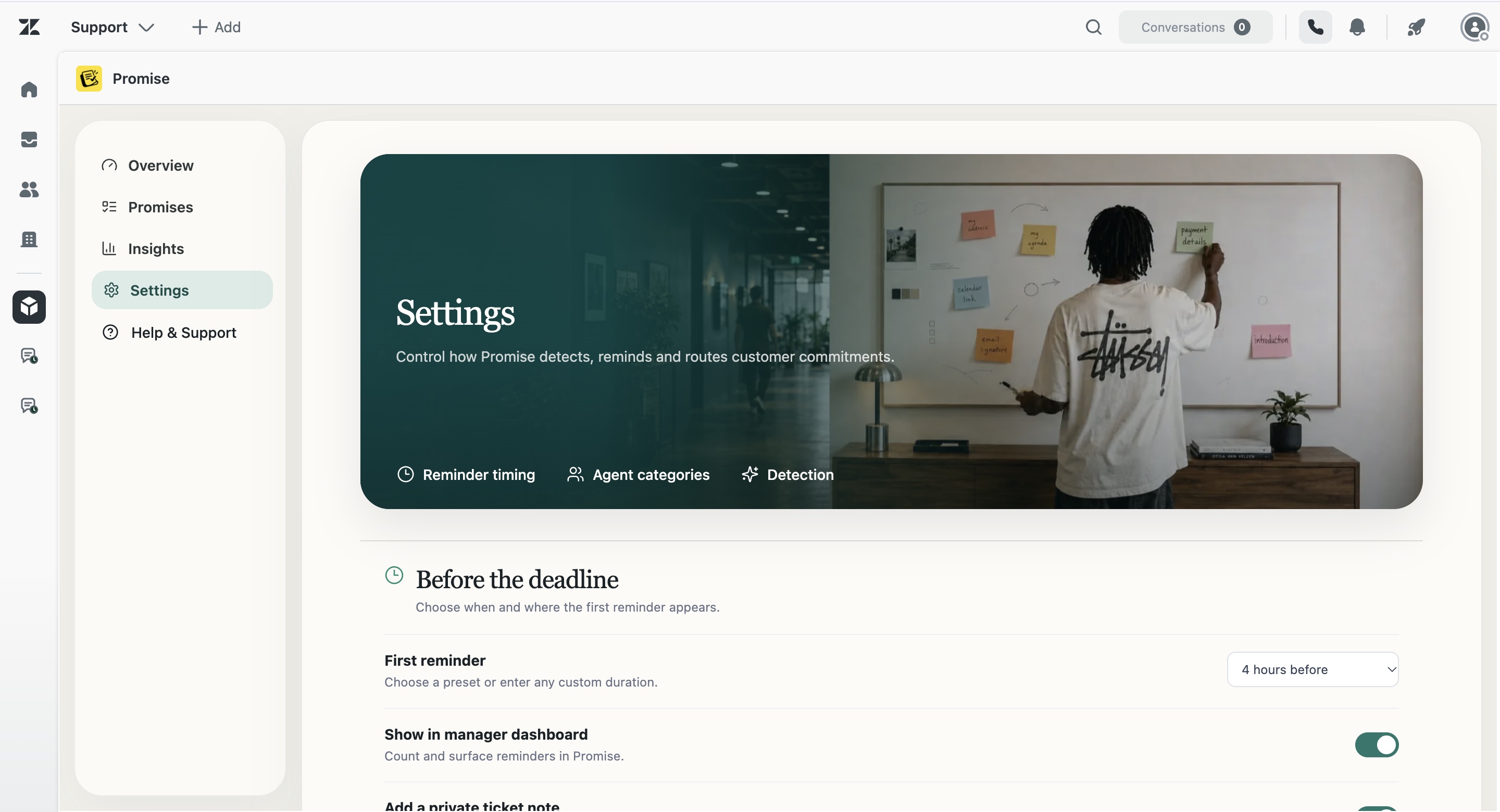
Use triggers for deterministic workflow and Promise for interpreting the conversation. Promise settings can also apply configured internal notes, tags or status actions after a commitment event.
How Promise handles this in Zendesk
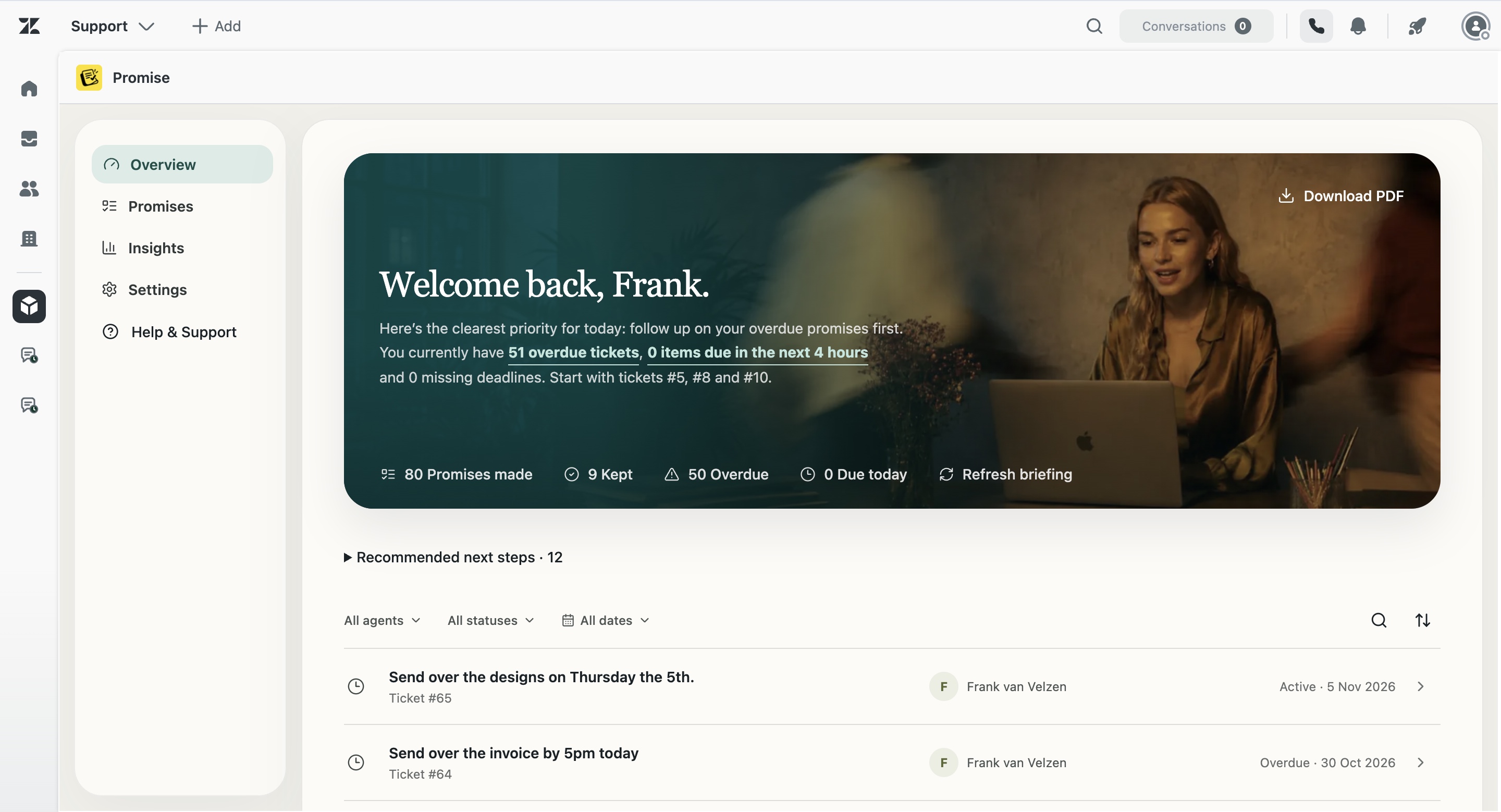
Promise is built around the commitment as a separate operational object. It keeps the original wording, a concise summary, owner, due date, status and source ticket together. Agents can review and correct the record. Managers can see team status and open the underlying ticket before acting.
Promise costs $5 per agent/month and is not yet live on the Zendesk Marketplace. AI results can be incomplete or incorrect, so the product supports human review rather than claiming perfect detection.
Examples from real support work
I’ll check with the warehouse and update you tomorrow.
I’ll ask engineering and come back to you Friday.
I’ll confirm with the hotel and update you this afternoon.
I’ll contact the carrier and send the latest status tomorrow.
Questions about Zendesk triggers vs commitment tracking
Can a trigger detect any promise sentence?
Rules can match known text patterns, but natural language varies and can be ambiguous.
Does Promise replace Zendesk triggers?
No. The tools can complement each other.
Are configured Promise actions public?
The disclosed automation is internal and does not send public replies.